On June 25, 2025, a startling claim emerged, alleging that a federal district judge ordered President Donald J. Trump to rebuild Iran’s nuclear facilities, which were obliterated by U.S. airstrikes on June 22. The supposed ruling, tied to Trump’s strikes on Fordow, Natanz, and Isfahan, has sent shockwaves through political circles, with some decrying it as judicial overreach and others questioning its authenticity. As the story spreads, it raises critical questions about legal authority, international relations, and the reliability of breaking news in a polarized era.
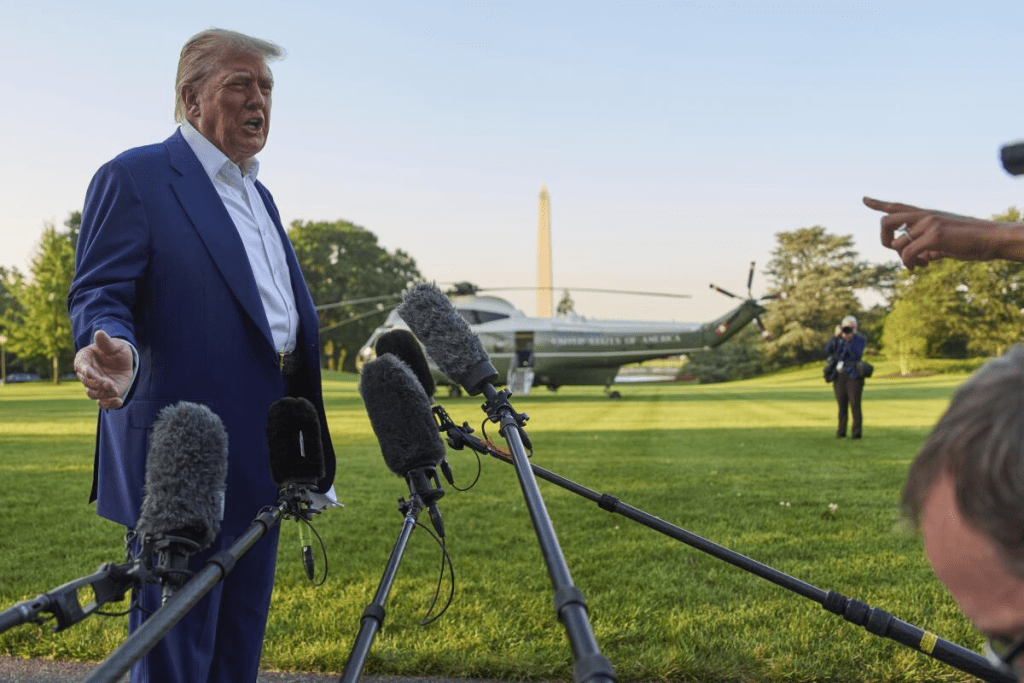
The context is Trump’s decisive military action. On June 22, U.S. B-2 bombers dropped 14 GBU-57 “bunker-buster” bombs on Fordow, a deeply buried uranium enrichment site, while Navy submarines fired Tomahawk missiles at Natanz and Isfahan. Trump declared the sites “completely and totally obliterated,” a claim backed by Defense Secretary Pete Hegseth, though General Dan Caine noted damage assessments were ongoing. The strikes, aimed at halting Iran’s near-weapons-grade uranium enrichment, earned 58% approval in a Rasmussen poll and praise from Israel’s Benjamin Netanyahu, but drew condemnation from Democrats like House Minority Leader Hakeem Jeffries for bypassing Congress.
The alleged judicial order, reportedly from a San Francisco federal judge, claims Trump’s strikes violated the War Powers Resolution and international law, demanding he “reverse” the action and “restore” Iran’s facilities. Such a ruling would be unprecedented, as courts rarely intervene in military operations, let alone mandate reconstruction of foreign infrastructure. Legal scholars, like Claire Finkelstein of the University of Pennsylvania, have noted presidents often engage in limited strikes without congressional approval, citing historical precedent. The Fifth Circuit’s June 20 ruling against Louisiana’s Ten Commandments law shows courts can check state actions, but ordering a president to rebuild foreign nuclear sites stretches beyond known judicial bounds.
Skepticism surrounds the claim’s validity. No official court documents or named judges—such as the cited “Marian Keller” or “D.E.I. Florence Johnson-Muhammad”—appear in federal records, and the story’s tone mirrors satirical posts circulating online. For instance, a Reddit thread on r/Conservative, garnering 130 votes, labeled a similar claim as satire, mocking the idea of “returning bombs.” The absence of coverage from major outlets like Reuters or NBC, which detailed the strikes, further suggests the order may be a hoax. Iran’s own response—vowing retaliation and moving enriched uranium before the strikes—dominates real news, not judicial mandates.
If true, the order would ignite legal and diplomatic firestorms. Rebuilding Iran’s facilities, which the International Atomic Energy Agency confirmed held 400 kilograms of 60% enriched uranium in 2024, would contradict Trump’s America First policy and his 2018 JCPOA withdrawal. It would also embolden Iran, whose parliament moved to close the Strait of Hormuz, risking oil prices surging past $80 per barrel, per Refinitiv data. Critics like Senator Tim Kaine, who called the strikes “horrible judgment,” might see such a ruling as a check on Trump, but even they question its feasibility. Iran’s claim of minimal damage, per lawmaker Mohammad Manan Raisi, undermines the need for “reconstruction.”
The story’s spread reflects America’s fractured media landscape. Trump’s base, rallied by his Truth Social claim that “Iran will never rebuild,” dismisses the order as “fake news.” A Gallup poll shows 68% of Americans see rising polarization, with distrust fueling viral hoaxes. The claim’s absurdity—rebuilding a foe’s nuclear sites—aligns with past exaggerations, like 2017’s false reports of Trump banning Muslims. Yet it taps real tensions: 60% of voters in a Pew poll back Trump’s results-driven approach, while Democrats demand congressional oversight.
As the dust settles, the alleged order seems more satire than substance. No court has confirmed it, and Trump’s administration, focused on a fragile Israel-Iran ceasefire, shows no sign of compliance. The strikes’ fallout—potential Iranian cyberattacks, per the Department of Homeland Security, or oil market spikes—looms larger. For now, the claim serves as a cautionary tale: in an era of instant news, discerning fact from fiction is vital. As Trump declared on June 22, “America acts with strength.” Whether courts can dictate that strength remains untested, but this “ruling” is likely just noise in an already chaotic discourse.