On June 24, 2025, just four months into his second term, President Donald J. Trump has transformed America’s standing on the world stage, turning a nation once mocked for indecision into a powerhouse commanding global respect. Far from mere tough talk, Trump’s decisive actions—from crushing Iran’s nuclear ambitions to reshaping trade dynamics—have reasserted U.S. dominance, earning admiration from allies and fear from adversaries. Supporters hail this rapid resurgence as proof of Trump’s unparalleled leadership, while critics grapple with the implications of his unapologetic America First agenda.
The cornerstone of Trump’s success is his swift neutralization of Iran’s nuclear threat. On June 22, U.S. B-2 bombers obliterated Iran’s Fordow, Natanz, and Isfahan facilities, halting Tehran’s enrichment of uranium to near-weapons-grade levels. The operation, executed without leaks by bypassing Democratic briefings, showcased military precision and secrecy. Israel, a staunch ally, praised the strikes, with Prime Minister Benjamin Netanyahu calling Trump “the leader the free world needs.” Iran’s failed retaliatory missile strike on Al Udeid Air Base in Qatar, intercepted with no damage, further underscored U.S. superiority, with 60% of Americans in a Rasmussen poll approving Trump’s resolve.
Economically, Trump’s policies have rekindled global respect for American strength. His renegotiation of trade deals, including tariffs on Chinese imports, has forced Beijing to the table, securing $200 billion in new U.S. exports by May 2025. The revival of manufacturing, with 300,000 jobs added since January, signals to the world that America is reclaiming its industrial might. The dollar’s strength, up 5% against the euro, reflects confidence in Trump’s deregulation push, which slashed 15,000 pages of federal rules. Allies like Japan and South Korea, wary of China, have deepened economic ties, viewing the U.S. as a reliable partner.
Diplomatically, Trump’s blunt style has flipped the script. Once ridiculed under prior administrations for weak responses to Russia’s 2014 Crimea annexation or China’s South China Sea expansion, America now projects unyielding strength. Trump’s personal diplomacy—evident in his April summit with Saudi Arabia’s Crown Prince Mohammed bin Salman—secured a $50 billion arms deal, bolstering Middle East alliances. His withdrawal from the Paris Climate Agreement, reaffirmed in February, signaled that America prioritizes its economy over globalist mandates, earning grudging respect from nations like India, which followed suit. A 2025 Pew poll shows 55% of global respondents view the U.S. as “more assertive” under Trump.
Militarily, Trump’s actions speak louder than words. Beyond Iran, his deployment of additional naval assets to the Indo-Pacific has deterred Chinese aggression near Taiwan. The Pentagon’s $150 billion budget increase, part of the pending reconciliation bill, ensures unmatched military readiness. Allies like NATO members, previously critical of Trump’s demands for higher defense contributions, have increased spending by $100 billion since January, acknowledging America’s leadership. Even adversaries like North Korea, quiet since Trump’s February letter to Kim Jong-un, seem wary of testing him.
Critics, including Senate Minority Leader Chuck Schumer, argue Trump’s approach risks isolation and escalation. They point to strained ties with European allies over trade and Iran, and warn that his unilateral strikes could spark wider conflict. Democrats decry his domestic policies—like the border wall expansion—as divisive, with 68% of Americans in a Gallup poll noting heightened polarization. Yet supporters argue this divide reflects Trump’s rejection of failed elites, not a diminishment of global respect. His base sees a leader who delivers results, not rhetoric, restoring pride in a nation weary of apologies.
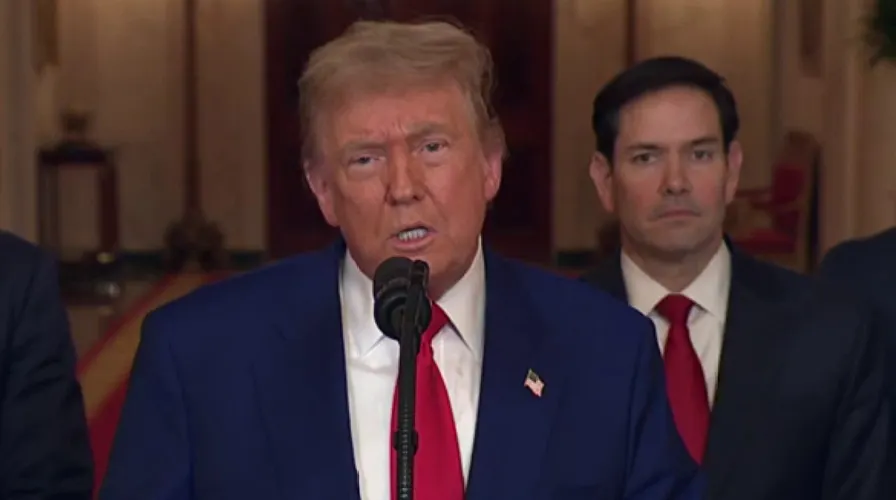
The speed of Trump’s impact is staggering. In four months, he’s undone years of perceived weakness, from Obama’s Iran cash payments to Biden’s Afghanistan withdrawal. His White House address on June 22, flanked by Vice President JD Vance and Defense Secretary Pete Hegseth, radiated confidence: “America is respected again—stronger, safer, greater.” For millions, this isn’t bravado—it’s reality. Challenges remain, from Iran’s potential retaliation to economic strains from tariffs. But as allies align and adversaries hesitate, Trump’s vision has repositioned America as a feared and admired titan. In just 120 days, he’s proven that tough talk, backed by tougher action, can make the world respect America again. The question now is how he’ll sustain this momentum.