San Francisco, CA – At 4:25 AM +07 on Sunday, May 18, 2025, a brief but revealing exchange on Elon Musk’s X platform between Quora CEO Adam D’Angelo and Google CEO Sundar Pichai has ignited a broader conversation about where the heart of tech influence now lies. The interaction, sparked by D’Angelo’s critique of Google Meet, not only showcased the power of X as a real-time public forum but also allowed Musk to assert his platform’s dominance over rivals like Facebook in the evolving digital landscape.
The exchange began when D’Angelo, a former Facebook CTO and current Quora leader, posted on X about his company’s experiment with switching from Zoom to Google Meet. “At Quora, we recently tested switching from Zoom to Google Meet for a week,” he wrote. “Google Meet is better in many small ways, but worse in one big way: audio quality, particularly background noise cancellation and echoing. That kills it, so we are staying on Zoom!” On most platforms, this might have gone unnoticed, but on X—shaped by Musk’s ethos of transparency and engagement—it became a viral moment.
In a rare move, Sundar Pichai responded directly, writing, “Hey Adam, will follow up offline as haven’t experienced this… we will debug to understand the root cause and fix. Thanks for flagging.” D’Angelo replied, “Thank you!! Would love to switch if this is fixed!” This public troubleshooting session, witnessed by millions, underscored X’s role as a space where tech leaders engage openly, a dynamic Musk was quick to capitalize on.
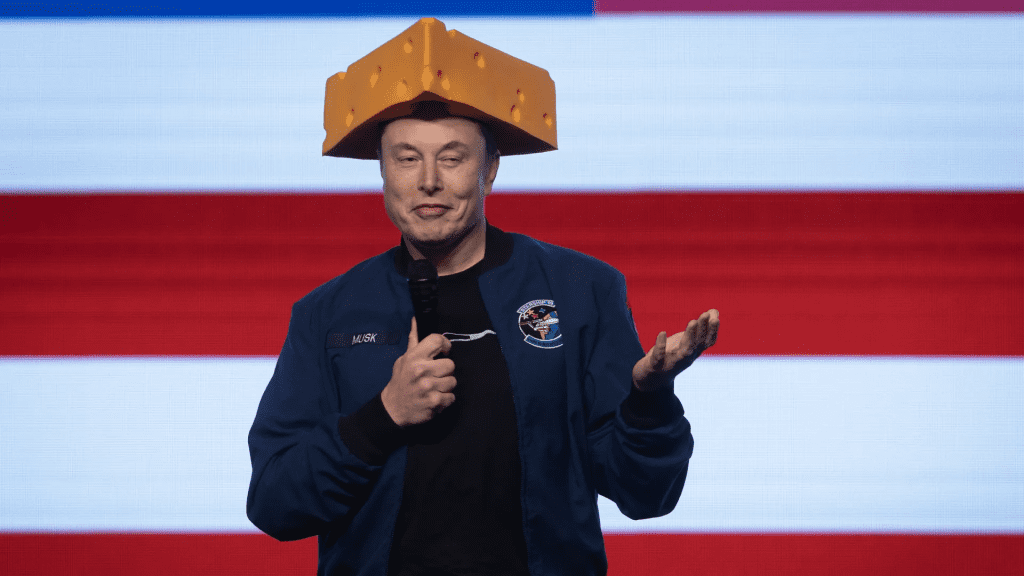
Tech founder Yuchen Jin commented, “Google is back and probably will win the AGI race when its CEO starts doing customer support on X,” prompting Musk to weigh in with a bold claim: “The smartest & most influential people in the world interact on X.” This wasn’t just a boast—it was a strategic jab at platforms like Facebook and LinkedIn, positioning X as the new hub for elite tech discourse. Users on X echoed this sentiment, with one noting, “Wild times when CEOs are doing support in the replies,” and another reflecting, “Now, it’s global, and communication barriers have fallen. Interesting times.”
Musk’s statement aligns with his broader vision for X, which has evolved under his leadership into more than a social media platform. Since acquiring Twitter in 2022, Musk has transformed X into a multifaceted ecosystem for news, payments, streaming, and public problem-solving, as seen with Starlink’s recent Dogecoin payment integration on May 15. Unlike Facebook, which has shifted focus to family groups and e-commerce, X has become the virtual boardroom where tech titans like Pichai and D’Angelo engage directly with each other and their audiences.
The significance of this moment lies in its optics. That this exchange happened on X—not Meta’s Threads or LinkedIn—reinforces Musk’s narrative that his platform is the new center of gravity for influential tech conversations. Facebook, despite its massive user base, has lost its edge as a space for high-level discourse, while X thrives on its raw, unfiltered nature. As one user put it, “That is why I learned a lot of things from these influential people who interact on X.”
This incident reflects a broader shift in digital leadership. CEOs are no longer distant figures issuing statements through PR channels; they’re active participants in the public square, managing reputations in real time. Musk’s X, with its emphasis on immediacy and transparency, is redefining how tech narratives are shaped, leaving competitors like Facebook struggling to keep up in the battle for influence.