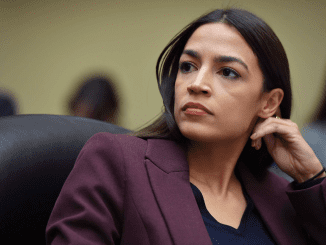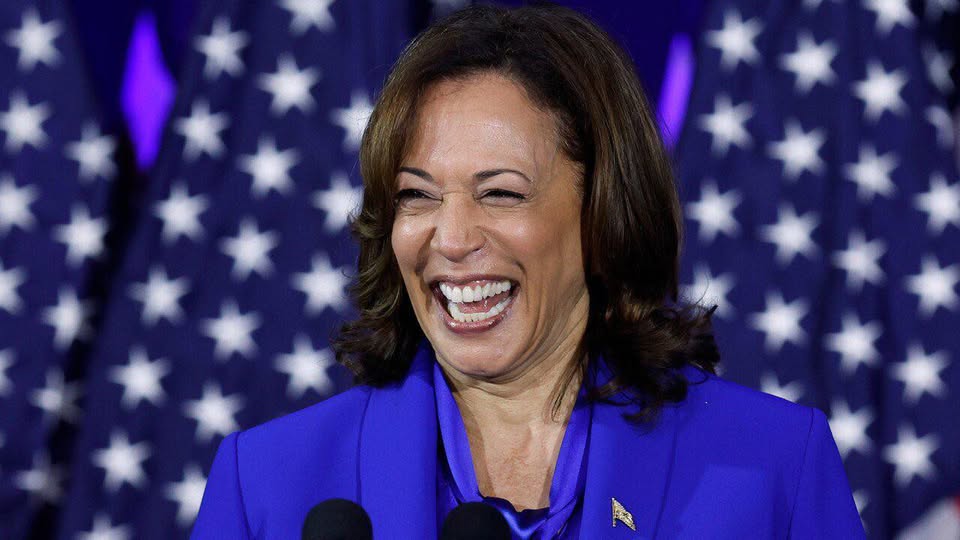
Washington, D.C., May 10, 2025 — Former Vice President Kamala Harris has emerged as the early frontrunner in the 2028 Democratic presidential primary, leading California Governor Gavin Newsom and Rep. Alexandria Ocasio-Cortez by 22 points, according to a new McLaughlin & Associates poll. The survey, conducted from April 29 to May 1, underscores Harris’s enduring appeal among Democrats, even as the party grapples with a leadership vacuum following her 2024 election loss to Donald Trump.
The poll, which surveyed 414 likely Democratic primary voters, shows Harris with 30% support for the 2028 nomination. Newsom and Ocasio-Cortez (AOC) tied at 8% each, while other contenders lagged: Senator Cory Booker at 7%, former Transportation Secretary Pete Buttigieg at 6%, Pennsylvania Governor Josh Shapiro and Minnesota Governor Tim Walz at 4% each, and Illinois Governor J.B. Pritzker at 3%. Harris’s 22-point lead mirrors earlier surveys, like a February 2025 McLaughlin poll where she led Buttigieg 35% to 12%, though her support has dipped slightly as the field remains fluid.
Harris’s lead is fueled by her high name recognition from her 2024 presidential run, where she secured 226 Electoral College votes but lost to Trump’s 312. Despite the defeat, she retains strong support among key Democratic blocs—younger voters, nonwhites, moderates, and less-educated voters—per a November 2024 Morning Consult survey, which found 43% of Democrats backing her for 2028. Her visibility as the 2024 nominee gives her an edge, but her loss has left some questioning her electability, with critics pointing to her failure to win swing states or the popular vote.
Newsom, a centrist with national ambitions, and AOC, a progressive firebrand gaining traction through her “Fighting Oligarchy” tour with Senator Bernie Sanders, represent competing ideological wings. AOC’s rising profile—19% of Democrats in an April Quantus Insights poll said she best reflects party values, compared to 17% for Harris—signals her potential to challenge Harris, especially among those seeking a stronger anti-Trump stance. Newsom, meanwhile, has positioned himself as a pragmatic leader but struggles to break through with only 8% support.
Other polls show a tightening race. An April Echelon Insights survey had Harris at 28%, down from 33% in March, while Booker surged from 2% to 11% after a 25-hour filibuster against Trump’s policies. A Data for Progress poll from mid-April showed Harris at 18%, with Buttigieg at 14%, and AOC and Booker gaining when Harris was excluded. These shifts suggest a fragmented Democratic coalition, with no candidate yet commanding a dominant lead.
Harris faces additional uncertainty. She’s reportedly considering a 2026 run for California governor, which could signal a step back from a 2028 presidential bid due to timing conflicts. Party donors remain skeptical, with some telling ABC News in March that there’s “little enthusiasm” to back any candidate early. AOC, Buttigieg, and Booker are gaining visibility, with AOC’s activism and Booker’s Senate presence resonating with different voter segments.
The 2028 primary is still years away, and early polls often reflect name recognition more than voter commitment, as Politico noted in December 2024. Harris benefits from her recent campaign, but her 2024 loss raises questions about her ability to unify the party and win a general election. The Democratic field could shift dramatically by 2028, with new candidates emerging or external factors—like Trump’s policies or economic conditions—reshaping priorities. The McLaughlin poll’s small sample size also limits its reliability, though Harris’s lead remains statistically notable.
For now, Harris holds a strong position, but her path to the nomination is far from certain. The Democratic Party, still reeling from 2024, must navigate ideological divides and find a leader who can challenge a Republican opponent in 2028. As AOC and others gain ground, Harris will need to address past criticisms and rally a fractured base. The 2028 race is shaping up to be a battle for the soul of the party—and Harris is off to an early, but precarious, lead.