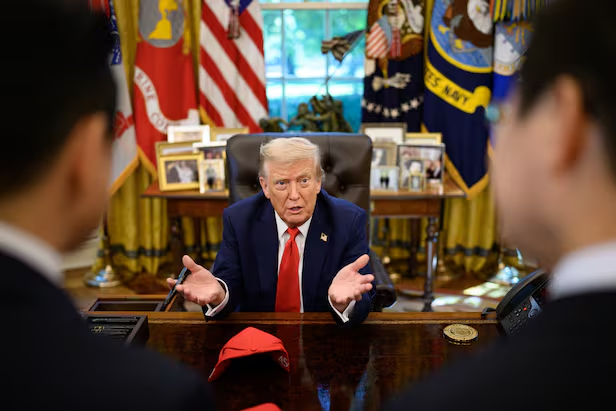
President Donald Trump announced on January 26, 2026, that he is increasing tariffs on South Korean imports to 25% from the current 15%, accusing Seoul of not living up to a recent trade agreement. In a statement from the White House, Trump claimed South Korea’s legislature has delayed enacting key provisions of the deal struck in October 2025, which reduced U.S. tariffs in exchange for Seoul’s commitments to increase American investments and open markets.
The hike affects a range of goods, including automobiles, lumber, pharmaceuticals, and other products, potentially adding billions to South Korea’s export costs. Trump described the move as necessary to enforce “reciprocal trade,” emphasizing that the U.S. will not tolerate partners who fail to honor agreements. “They are not living up to their deal with the United States,” he said, signaling a return to his first-term strategy of using tariffs as leverage against allies and adversaries alike.
South Korean officials scrambled to respond, with the government reassuring U.S. counterparts of their intent to pass enabling legislation soon. Shares in major Korean automakers like Hyundai and Kia dipped in response, reflecting fears of retaliatory impacts on the $150 billion bilateral trade relationship. Economists warn the escalation could raise consumer prices in the U.S. for electronics and vehicles while straining alliances amid global supply chain pressures.
The decision aligns with Trump’s broader economic agenda, including recent threats to Canada and Mexico. Critics argue it risks trade wars and higher costs for Americans, while supporters praise it as tough negotiation that protects U.S. workers. As midterms approach, the tariff hike tests Trump’s “America First” doctrine against diplomatic fallout. Seoul has pledged urgent action, but for now, the U.S.-South Korea pact hangs in the balance.