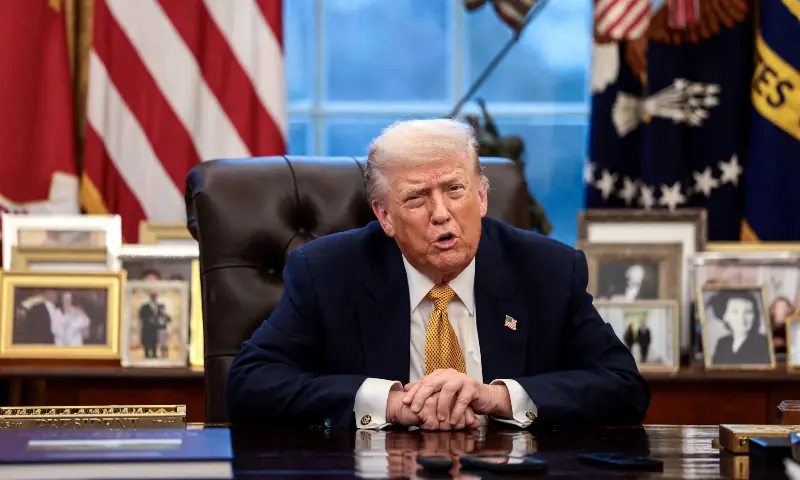
President Donald Trump has issued a pointed statement criticizing the Nobel Peace Prize committee for overlooking his foreign policy achievements, declaring that he no longer feels bound by an obligation to prioritize peace above all else. In a January 21, 2026, post, Trump wrote: “Considering your country decided not to give me the Nobel Peace Prize for having stopped 8 wars plus, I no longer feel an obligation to think purely of peace.”
The remark comes amid ongoing debates over his administration’s aggressive approach to international relations. Trump has repeatedly claimed credit for brokering peace deals in the Middle East, de-escalating tensions with North Korea, ending U.S. involvement in certain conflicts, and preventing new wars through deterrence and economic pressure. Supporters point to the Abraham Accords, reduced troop commitments abroad, and the recent Venezuela operation as evidence of his peacemaking record, arguing the Nobel committee’s repeated snubs reflect political bias.
Critics, however, question the accuracy of Trump’s “8 wars stopped” claim and warn that his latest statement signals a more confrontational posture. They cite the Venezuela intervention, tariff threats, and visa freezes for high-risk countries as examples of policies that risk escalation rather than de-escalation. Some analysts interpret the comment as a rhetorical jab at Norway—home of the Nobel committee—while others see it as a broader shift toward unilateralism.
The Nobel Peace Prize has long been controversial, with past winners including Barack Obama (2009) and the European Union (2012) drawing similar backlash. Trump’s repeated nominations by allies have never advanced far, fueling his frustration. As his second term progresses, the statement underscores a willingness to prioritize strength and results over traditional diplomacy. Whether it marks a genuine policy pivot or a symbolic outburst remains unclear, but it has reignited debate over America’s role on the global stage.