A provocative statement circulating online has reignited tensions over religion and politics in America: “No Muslim should be in public office in the United States. Islam is a toxic ideology. It has no place in this country.” Proponents of this view argue that Islamic principles are incompatible with American values, citing concerns over Sharia law, women’s rights, and national loyalty. They point to global conflicts involving Islamist extremism as evidence that the faith poses inherent risks, demanding stricter eligibility rules for elected positions to safeguard constitutional freedoms.
This sentiment echoes historical prejudices, reminiscent of past bans on Catholics or Jews in office, now widely condemned. Supporters often reference figures like Rep. Ilhan Omar, a Muslim congresswoman, accusing her of anti-American stances, though without substantiated evidence of disloyalty. In states like Minnesota, home to large Somali-American communities, such rhetoric has fueled backlash against immigrant politicians, tying into broader immigration crackdowns under the Trump administration.
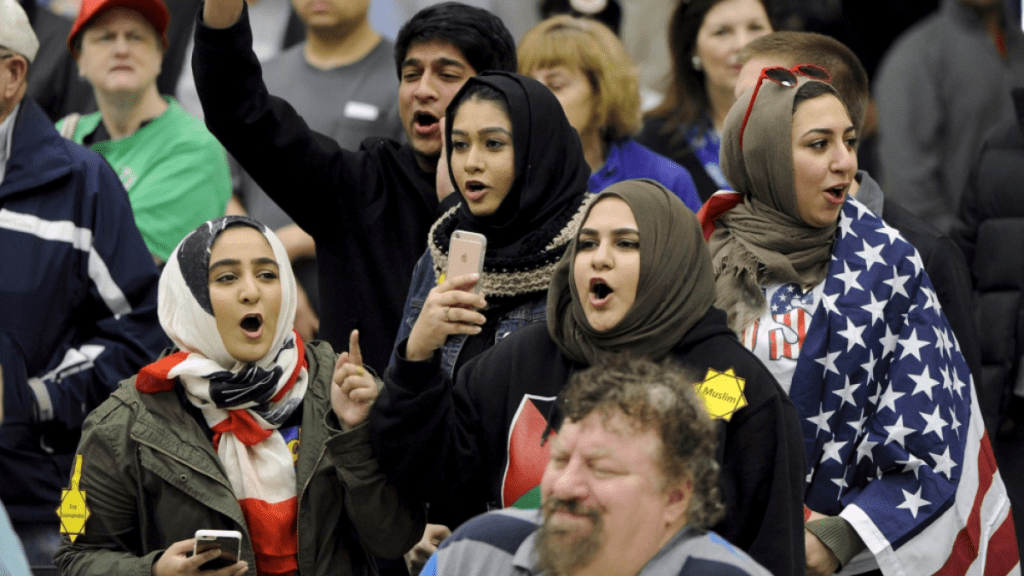
Opponents decry the idea as blatant Islamophobia and unconstitutional. The First Amendment prohibits religious tests for office, a principle upheld by courts since the Founding Fathers. Civil rights groups emphasize that Muslim Americans, numbering over 3 million, serve honorably in government, military, and law enforcement, contributing to society without compromising oaths. “This is about fear-mongering, not facts,” one ACLU spokesperson said, warning that exclusionary policies erode democracy and alienate communities.
Polls show divided opinions: 35% of Republicans favor religious restrictions, per recent surveys, while 70% of Democrats oppose. As midterms approach, the debate tests America’s commitment to pluralism. Experts warn that demonizing an entire faith risks radicalization and division, urging dialogue over division. For now, the Constitution stands firm, but calls for change persist in a polarized nation.