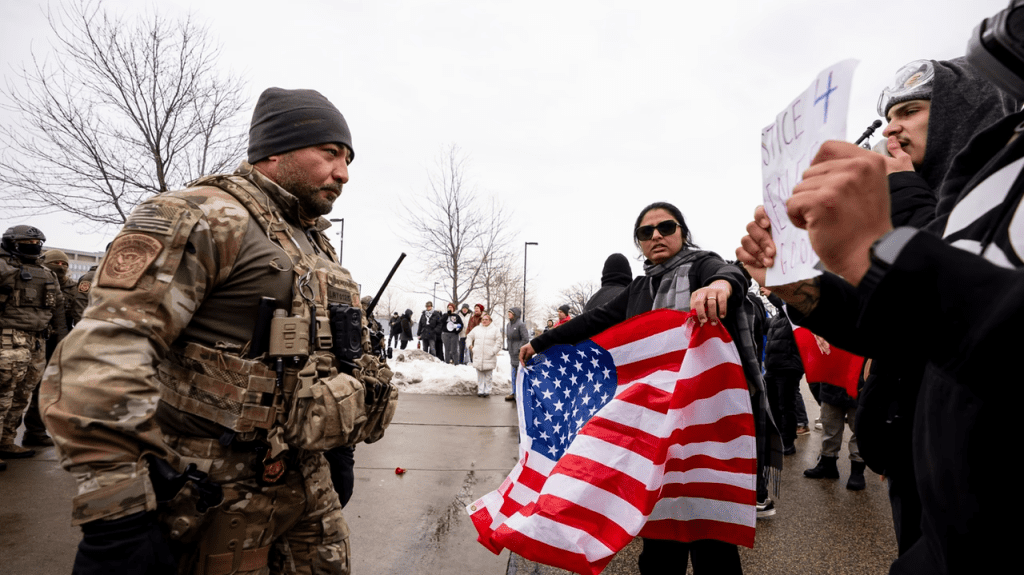
Tensions in Minneapolis have boiled over following a fatal ICE shooting on January 7, 2026, igniting protests and calls from conservative critics to let the city “destroy itself” without a dime of federal taxpayer money for rebuilding. The incident, where an ICE agent killed 37-year-old U.S. citizen Renee Nicole Good during a raid—allegedly in self-defense after she tried to ram officers—has exposed deep rifts over immigration enforcement.
Mayor Jacob Frey’s fiery response, demanding ICE “get the f*** out” and dismissing federal claims as “bulls***,” has drawn sharp rebuke. Governor Tim Walz activated the National Guard on standby, urging calm while criticizing “propaganda” from Washington. Protests turned chaotic, with demonstrators clashing with agents amid a DHS surge of 2,000 personnel targeting Somali fraud schemes estimated at billions in stolen funds.
Conservative lawmakers and commentators argue that Minneapolis’s “sanctuary” stance and perceived incitement warrant cutting federal aid. “If they want to burn it down, fine—just no bailout,” one GOP senator said, proposing bills to condition grants on cooperation with ICE. They cite past unrest, like the 2020 George Floyd riots costing over $500 million in damages, much covered by federal disaster relief, as evidence of repeated fiscal irresponsibility.
City officials counter that withholding funds punishes residents for defending against overreach, exacerbating inequality in a diverse metropolis. Advocates warn it could cripple infrastructure, schools, and emergency services, violating federal obligations.
As investigations continue and deportations accelerate, the debate tests federal-state relations under the Trump administration. With midterms looming, punishing “rogue” cities could become policy, but at the risk of deepening national divides. For now, Minneapolis stands as a flashpoint: self-determination versus accountability.