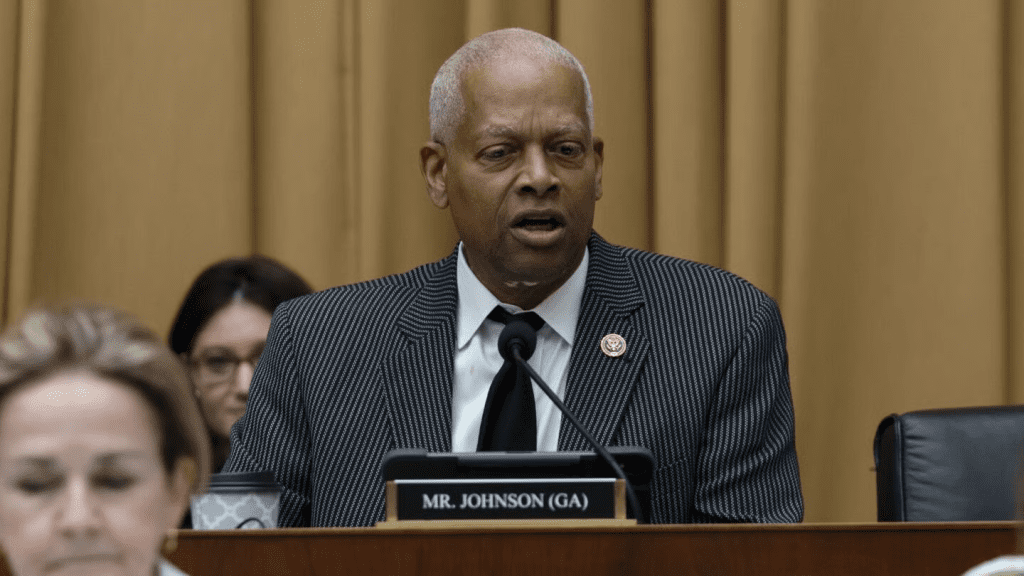
Washington, D.C. – In a blistering floor speech that has reverberated through the halls of Congress and beyond, Georgia Democratic Rep. Hank Johnson accused Republicans of actively supporting “the genocide of Black and Brown Americans” through policies he deems discriminatory and destructive. The December 10, 2025, remarks, delivered amid heated debates over the Trump administration’s mass deportation program, framed GOP-led immigration crackdowns as a deliberate assault on minority communities.
Johnson, a ranking member on the House Judiciary Committee, thundered: “Republicans support the genocide of Black and Brown Americans by tearing families apart, stripping healthcare, and rolling back civil rights protections.” He tied the charge to recent executive actions, including the revocation of 85,000 visas and the dismantling of DEI initiatives in federal contracting, which he called a “war on equal opportunity.” The congressman invoked historical parallels, from the Tuskegee experiments to Jim Crow-era disenfranchisement, warning that current policies echo “calculated efforts to erase communities of color.”
The accusation arrives at a fever pitch for Democrats, still reeling from 2024 losses and grappling with Trump’s approval ratings on immigration, which hover at 58% among independents. Johnson’s rhetoric echoes his past controversies, including a 2012 claim that all Republicans harbor racist views and a May 2025 Holocaust comparison to deportation raids. Republicans swiftly condemned the speech as “vile demagoguery,” with House Speaker Mike Johnson retorting: “Hank’s words dishonor real genocide victims and inflame divisions for political gain.”
As 2026 midterms loom, Johnson’s broadside underscores a Democratic strategy: Weaponizing racial justice narratives to rally the base amid policy defeats. Yet, in a nation weary of hyperbole—where polls show 52% of Black voters prioritizing economic relief over identity politics—the “genocide” label risks alienating moderates. For Johnson, a survivor of prostate cancer and a vocal advocate for equity, it’s a moral clarion call. But in Washington’s echo chamber, such firebrands often fan flames without forging change, leaving the question: Is this righteous outrage, or rhetoric run amok?