Washington, D.C. – As the U.S. military discharges its first wave of transgender service members under a reinstated ban, a thorny question grips the nation: Do you support President Donald Trump’s policy prohibiting those with gender dysphoria from serving? The Supreme Court’s May 2025 ruling cleared the way for enforcement, lifting a lower-court injunction and allowing the Pentagon to proceed with separations affecting up to 1,000 active-duty troops.
The policy, rooted in Trump’s January 27 Executive Order 14183, bars enlistment and mandates removal for anyone diagnosed with gender dysphoria or who has undergone related medical transitions. Defense Secretary Pete Hegseth, dubbed the “War Secretary,” defends it as a “common-sense reset” to prioritize “combat readiness, unit cohesion, and cost control.” Citing a 2018 Rand study revisited under the administration, officials argue transgender personnel rack up $8-10 million annually in non-deployable time and treatments, straining resources in an era of great-power rivalry. “We can’t afford distractions,” Hegseth told Fox News, echoing Trump’s first-term rationale that transgender service undermines “lethality.”
Supporters, including 62% of Republicans per a December Reuters/Ipsos poll, view it as overdue discipline. Veterans’ groups like the American Legion applaud the focus on standards, noting the military’s 1.3 million active-duty slots demand unwavering fitness. In red states, it’s hailed as cultural course-correction, shielding troops from what critics call “woke experiments” that eroded morale under Biden.
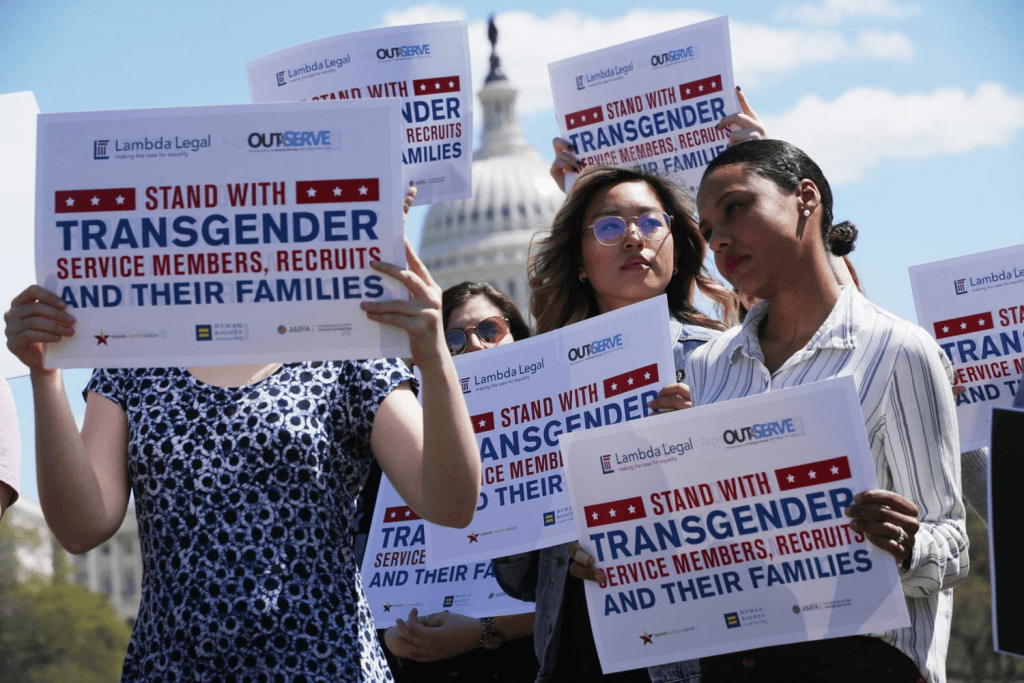
Opponents decry it as discriminatory cruelty. A D.C. Circuit Court dissent lambasted the ban as “soaked in animus,” while LGBTQ+ advocates like Lambda Legal warn of talent drain—thousands of skilled servicemembers, from pilots to medics, now face honorable discharges laced with stigma. “This isn’t about readiness; it’s prejudice in uniform,” argued plaintiff attorney Shannon Minter, citing Biden-era data showing no impact on cohesion. With lawsuits piling up—from New York’s AG coalition to GLAD’s challenges—the policy risks recruiting shortfalls in a force already 41,000 below targets.
As separations accelerate, the ban crystallizes Trump’s second-term ethos: Merit over identity, or exclusion over equity? In boot camps and barracks, the answer marches on, one discharge at a time.