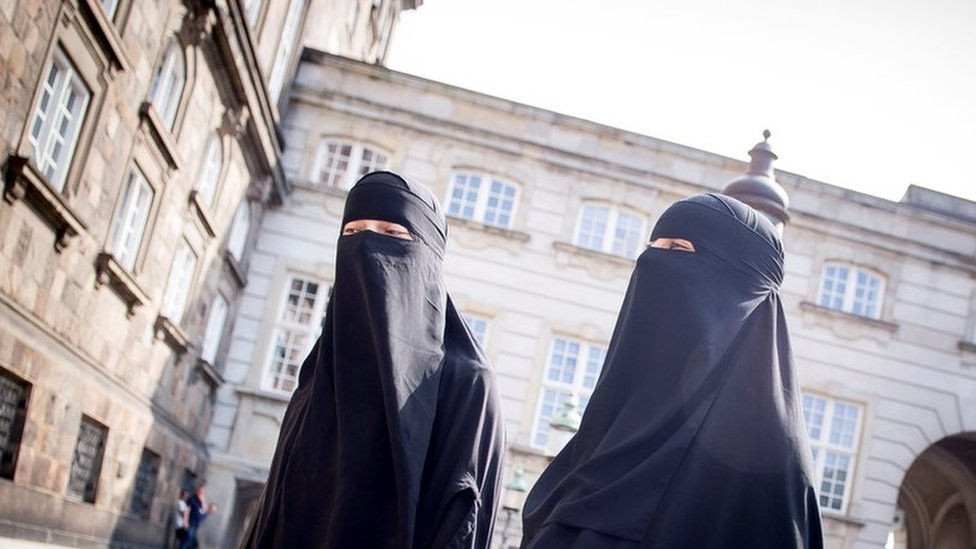
COPENHAGEN – Denmark’s long-standing “burqa ban,” enacted in 2018 to outlaw face-covering garments in public spaces, is set for a dramatic expansion into educational institutions, with Prime Minister Mette Frederiksen declaring that Muslim immigrants must conform to Danish norms or face legal repercussions—or deportation. The announcement, delivered Thursday amid a national debate on integration, signals a hardening of the Nordic kingdom’s secular stance, prioritizing “democracy over religious expression” in a move critics decry as cultural coercion.
Frederiksen, the Social Democrat leader who once opposed the original law, now champions its extension to schools and universities, citing “gaps in legislation that allow Muslim social control and oppression of women.” The 2018 ban, fining violators up to 10,000 kroner ($1,450) for wearing niqabs or burqas, was ostensibly neutral—targeting balaclavas too—but widely viewed as aimed at the 150-200 Muslim women who don such veils. Enforcement has been lax, with just 23 fines issued by 2019, but Frederiksen vows zero tolerance in classrooms: “You have the right to your faith, but democracy takes precedence. God steps aside.”
The policy ties into a broader “integration mandate,” where non-compliance could trigger citizenship revocation for naturalized immigrants, a tool Denmark pioneered in 2021 for dual nationals convicted of terror links. “Adjust to our culture and rules, or leave,” Frederiksen stated bluntly, framing it as empowerment: ending prayer rooms at universities and veils that “hide expressions and hinder community.” Supporters, including the Danish People’s Party, hail it as safeguarding gender equality in a nation where 85% identify as non-religious.
Human rights advocates recoil. Amnesty International slammed the push as a “discriminatory violation of women’s rights,” warning it isolates veiled women further, much like France’s 2010 ban drove niqab-wearers indoors. “This isn’t liberation—it’s exclusion,” said one Copenhagen-based activist, noting protests that once drew hundreds. With Europe’s far-right surging, Denmark’s edict risks amplifying anti-Muslim sentiment, where only 0.3% of the 5.9 million population wears full veils. W or L? For assimilation hawks, a win; for pluralism, a loss. As Frederiksen eyes 2026 elections, Copenhagen’s classrooms become the new battleground: veils off, or voices silenced?