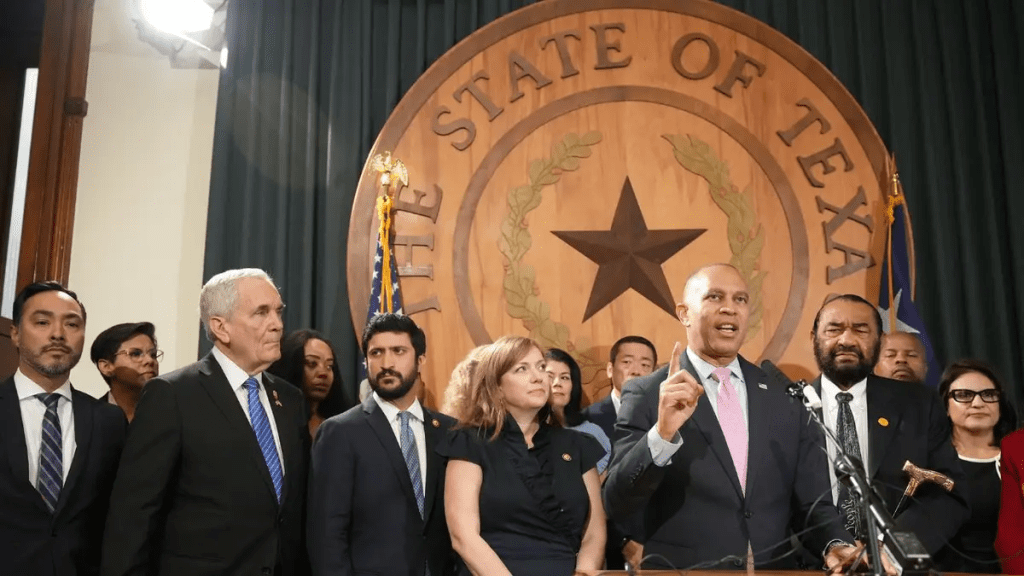
On August 12, 2025, Texas lawmakers approved a controversial new congressional map, adding five Republican-leaning seats while redrawing Democratic Rep. Jasmine Crockett’s Dallas-based district out of existence. The map, passed by the Republican-dominated Texas House and Senate, aims to solidify GOP control of the state’s U.S. House delegation, increasing their share from 25 to 30 of 38 seats ahead of the 2026 midterms. The move follows President Donald Trump’s push to bolster Republican majorities in Congress.
The redistricting targets Democratic strongholds in Austin, Dallas, Houston, and South Texas, reshaping districts to favor GOP candidates. Crockett, a vocal critic of Trump, finds her home drawn out of her 30th District, forcing her to campaign among unfamiliar voters in a Republican-leaning area or face a primary against another Democrat. She condemned the map as a “power grab to silence voters,” alleging it dilutes minority voting power. Democrats argue the map violates the Voting Rights Act by packing voters of color into fewer districts, creating 24 majority-white districts, up from 22.
Gov. Greg Abbott, who championed the redistricting, hailed the map as aligning with Texas’ shifting demographics, citing GOP gains among Hispanic voters. Critics, including Rep. Lloyd Doggett, call it a “Trump map” designed to entrench Republican power. Legal challenges are expected, with Democrats vowing to fight in court, though past lawsuits against Texas maps have taken years to resolve. The approval, despite Democratic attempts to stall by breaking quorum, underscores the GOP’s legislative dominance.
This redistricting battle could reshape Congress, with ripple effects nationwide as other states consider similar moves. The fight for fair representation continues as legal and political battles loom.