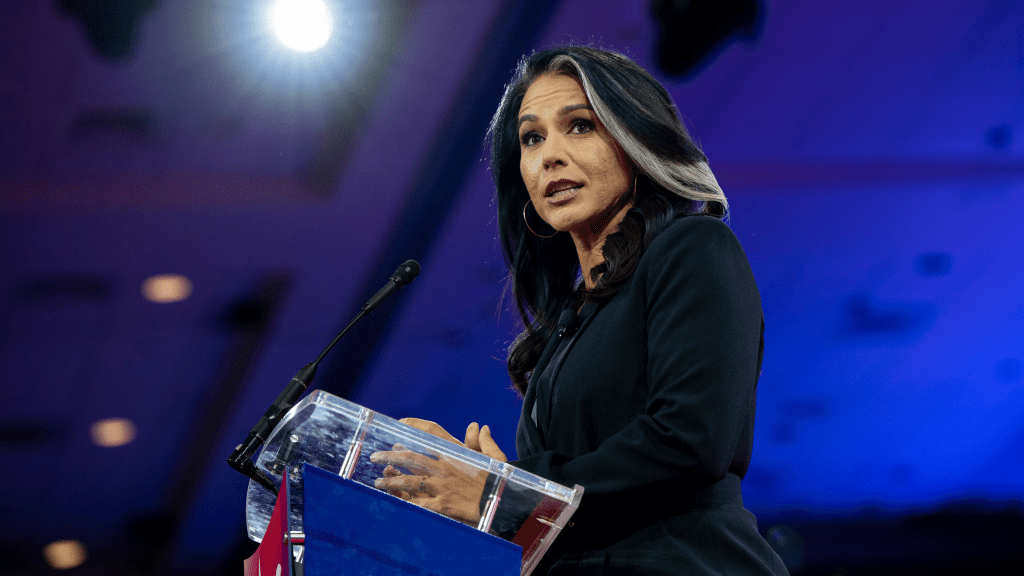
Director of National Intelligence Tulsi Gabbard has reignited claims of collusion between intelligence operatives and mainstream media, alleging ongoing efforts to undermine President Donald Trump. In a recent interview, Gabbard asserted that “Operation Mockingbird,” a historical CIA program to influence media, persists within the intelligence community. She accused certain media outlets of working with “deep state” actors to propagate false narratives against Trump, particularly reviving discredited 2016 Russia collusion claims.
Gabbard’s allegations center on newly declassified documents, which she claims reveal coordinated efforts by Obama-era officials to manipulate public perception. She pointed to media silence or selective reporting on these disclosures as evidence of complicity, naming outlets like The New York Times and CNN for allegedly burying the truth. Gabbard vowed to dismantle these operations, emphasizing her commitment to transparency and accountability.
Critics, including Democratic lawmakers, dismiss Gabbard’s claims as conspiratorial, arguing they misrepresent established intelligence findings. A 2020 Senate Intelligence Committee report, led by then-Chairman Marco Rubio, confirmed Russia’s interference in the 2016 election, contradicting Gabbard’s narrative. Former CIA officials, like Susan Miller, have also pushed back, insisting their assessments relied on verified intelligence, not fabrications.
The controversy has polarized opinions, with Trump supporters rallying behind Gabbard’s push for declassification, while opponents warn it risks undermining trust in institutions. As Gabbard presses forward, her accusations raise questions about media integrity and the intelligence community’s role in shaping public discourse.