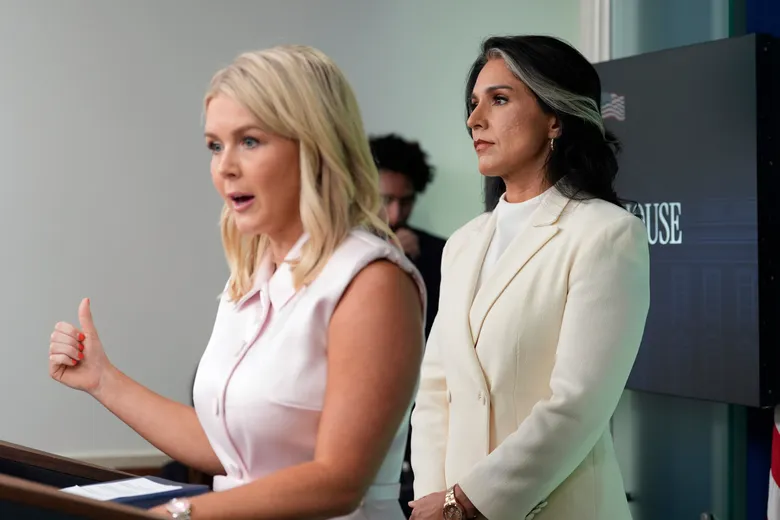
On July 23, 2025, White House Press Secretary Karoline Leavitt and Director of National Intelligence Tulsi Gabbard launched a scathing attack on mainstream media during a fiery White House briefing, accusing outlets of perpetuating false narratives. The duo focused on what they call the “Russia hoax,” alleging that Obama-era officials, including former President Barack Obama, manufactured intelligence to claim Russian interference in the 2016 election. Gabbard presented declassified documents, asserting they show a “treasonous conspiracy” to undermine Trump’s presidency, while Leavitt slammed journalists for spreading “lies” that fueled division.
Leavitt, 27, criticized media for running with unverified claims, pointing to statements from Democrats like Hillary Clinton and Adam Schiff, who she said falsely labeled Trump a Russian asset. Gabbard claimed her office’s evidence, including 114 pages of emails, proves Obama’s team knew Russia did not alter vote counts, contradicting the 2017 intelligence assessment. She has referred the matter to the DOJ for potential prosecution, though she dodged questions about specific charges, citing legal constraints.
Democrats, including Representative Jim Himes, dismissed the allegations as baseless, warning that terms like “treason” inflame tensions. CBS’s Margaret Brennan questioned the claims’ validity, noting prior investigations, like John Durham’s, found no grounds to charge Obama. The briefing, attended by outlets like CNN and NBC, saw tense exchanges, with Leavitt calling for media to review Gabbard’s documents.
The event underscores Trump’s strategy to challenge media credibility, following his $16 million 60 Minutes settlement. As Leavitt and Gabbard push for accountability, the debate over media bias and historical election narratives intensifies, deepening America’s political divide. Supporters cheer the confrontation, while critics fear it risks eroding trust in institutions.