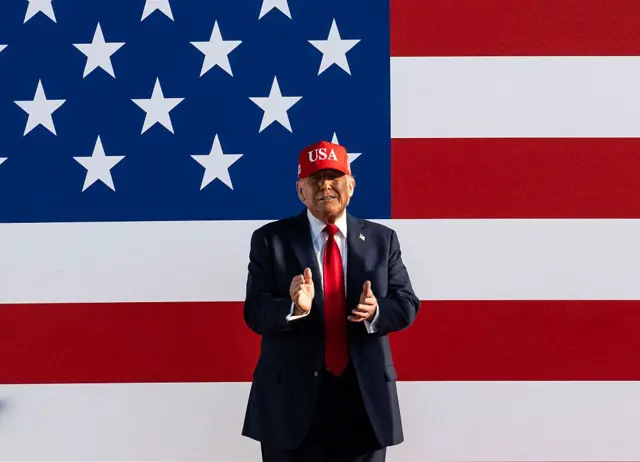
In a recent interview on July 10, 2025, President Donald Trump articulated his desired legacy, stating, “I would like to be remembered as a good person. A person who saved our country.” The remark, made during a discussion on his second term’s priorities, reflects Trump’s ambition to be seen as a transformative figure in American history. His supporters view this as a testament to his “America First” agenda, while critics argue it oversimplifies a polarizing presidency.
Trump’s claim hinges on policies like his mass deportation program, which has removed over 158,000 undocumented immigrants since January 2025, and economic measures yielding a $26 billion budget surplus in June 2025. He points to tariffs generating $113.3 billion this fiscal year and sweeping deregulation as evidence of revitalizing the nation. The Department of Government Efficiency, until recently led by Elon Musk, claims $150 billion in savings, though critics question its long-term impact.
Opponents, including Democratic leaders like Representative Alexandria Ocasio-Cortez, challenge Trump’s self-description, citing controversies like the Jeffrey Epstein files and arrests of judges aiding immigrants. They argue his policies, including cuts to benefits for undocumented immigrants, have deepened division and economic strain, with potential $967 billion losses from deportations. Civil rights groups also criticize his rhetoric as inflaming tensions, pointing to violent protests during ICE raids.
Trump’s vision of “saving” America resonates with his base, who credit him with restoring national pride and security. Yet, the nation remains split, with 46% approving of his performance in recent polls. As legal battles and policy debates intensify, Trump’s legacy—whether as a savior or a divisive figure—remains a contentious question shaping the 2025 political landscape.