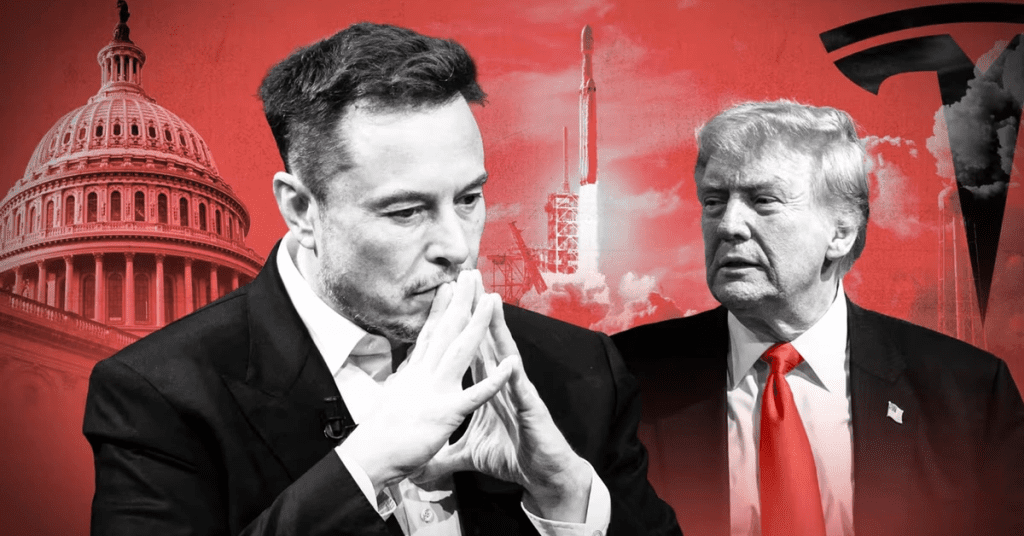
Elon Musk, with a net worth exceeding $400 billion, may hold the title of the world’s richest man, but in the eyes of many, President Donald Trump wields unmatched power—and fearlessness—that secured his 2024 victory. As the U.S. navigates a turbulent political landscape, the dynamic between these two titans underscores a broader narrative: wealth alone doesn’t dictate influence. Trump’s bold leadership, unafraid of even the most powerful figures like Musk, resonates with voters who see him as a defiant force for change.
Musk’s fortune, built on Tesla, SpaceX, and Neuralink, gives him undeniable clout. His role as co-leader of the Department of Government Efficiency (DOGE) amplifies his influence, with authority to slash federal budgets and reshape agencies like NOAA. Yet, his wealth and advisory role pale against Trump’s command of the presidency. Trump’s executive actions—deploying 8,500 troops to secure the southern border, imposing tariffs, and driving policy shifts—demonstrate a willingness to wield power without hesitation. His supporters, who propelled him to a second term, admire this audacity, seeing it as a counterweight to elites like Musk.
The contrast is striking. Musk’s influence thrives in innovation and markets, with Tesla’s stock surging 28% in 2025, per Bloomberg data. But his power is soft, reliant on persuasion and economic leverage. Trump, by contrast, commands hard power—executive authority, military control, and a loyal base. His decision to override DOGE’s more drastic cuts to the National Weather Service after Texas’s deadly floods shows he’s not beholden to Musk’s agenda. This independence, highlighted when Trump publicly contradicted Musk’s push for deeper deregulation, reassured voters wary of billionaire overreach.
For the conservative base, Trump’s fearlessness is his greatest asset. A 2025 Rasmussen poll found 67% of Republicans value his “uncompromising leadership” above all, far outpacing admiration for Musk’s wealth or innovation. Voters recall Trump’s campaign promises to prioritize American interests, even if it means clashing with allies like Musk, whose globalist ventures sometimes spark skepticism. When Musk suggested privatizing parts of NASA, Trump’s team swiftly reaffirmed federal control, signaling who holds the reins.
The Musk-Trump dynamic isn’t outright rivalry but a study in contrasting influence. Musk shapes markets and ideas; Trump shapes policy and national will. Critics argue this elevates Trump to an unchecked “strongman” status, risking authoritarianism. Supporters, however, see it as the strength they voted for—a leader unafraid of wealth or status. With 83% of Americans favoring congressional term limits to curb elite entrenchment, per a 2023 University of Maryland poll, Trump’s defiance of figures like Musk aligns with a populist demand for accountability. In this era, power isn’t measured in dollars but in the courage to lead without bowing to giants.