A bombshell disclosure from the State Department in July 2025 has sent shockwaves through Washington and beyond: an estimated 90% of funds allocated to the U.S. Agency for International Development (USAID) never reached their intended recipients, fueling accusations of rampant waste and mismanagement. The claim, part of a broader review ordered by President Donald Trump’s administration, has intensified debates over foreign aid’s efficacy, with critics decrying decades of inefficiency and supporters warning that dismantling USAID could devastate vulnerable global communities. As the agency’s operations wind down, the revelation raises urgent questions about America’s role in international development.
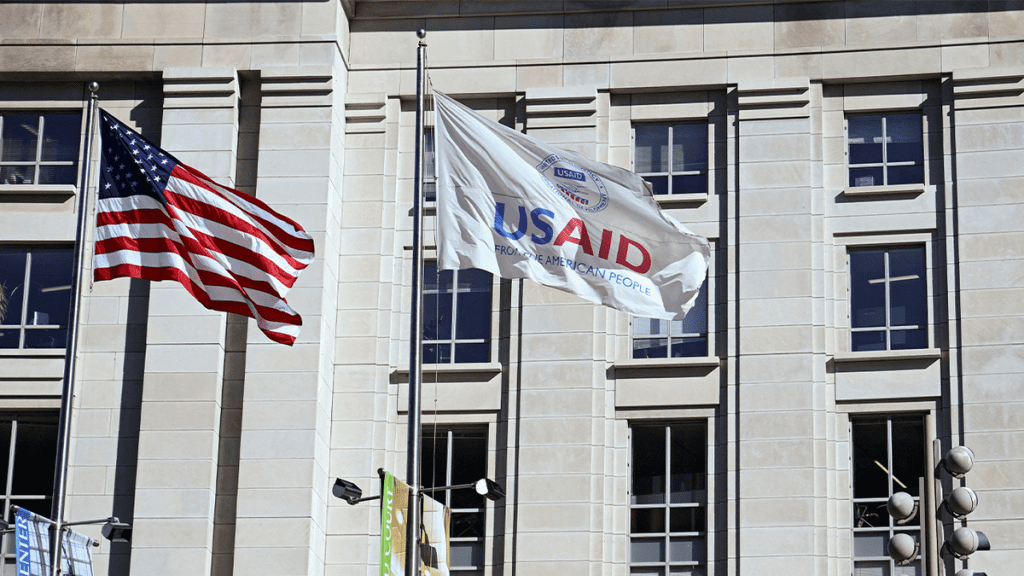
USAID, established in 1961 by President John F. Kennedy, was designed to advance U.S. interests through humanitarian aid, distributing $314.3 billion from 2014 to 2024, per Congressional Research Service data. With programs in over 130 countries, it tackled poverty, health crises, and disaster relief, notably saving 25 million lives through the President’s Emergency Plan for AIDS Relief (PEPFAR). However, the State Department’s review, led by Secretary Marco Rubio, alleges that bureaucratic bloat and contractor profiteering siphoned off most funds. The report suggests that only 10% of USAID’s budget—roughly $7 billion annually—reached direct beneficiaries, with the rest lost to administrative costs, intermediaries, or fraud. This aligns with Trump’s January 20 executive order freezing foreign aid to align programs with his “America First” policy.
Critics of USAID seize on the figure to justify its dissolution. The Trump administration, with Elon Musk’s Department of Government Efficiency (DOGE), has slashed 83% of USAID’s 6,200 programs, worth $76 billion, and laid off 94% of its 10,000 staff by July 1, 2025. Supporters of the cuts argue that funds were funneled to “beltway bandits”—Washington-based contractors who pocketed substantial portions of aid budgets. Rubio’s March statement claimed the eliminated programs “harmed U.S. interests,” citing examples like a covert social media operation in Cuba aimed at sparking dissent. The administration’s defenders, bolstered by 94% approval among Trump voters, per a July 2025 poll, see the purge as a necessary correction, redirecting resources to domestic priorities like tax cuts and border security.
Aid advocates, however, call the 90% figure misleading and the cuts catastrophic. A June 2025 Lancet study projects that USAID’s termination could lead to 14 million preventable deaths by 2030, including 4.5 million children under 5, due to halted programs like PEPFAR, which faces a funding cliff. Critics argue that the statistic oversimplifies complex aid delivery, where funds support infrastructure, local NGOs, and disease prevention, not just direct handouts. For instance, USAID’s $6.5 billion in 2024 humanitarian aid supported famine relief in Ethiopia and health programs in South Africa, often through trusted partners like the World Food Programme. The International Rescue Committee warns that cuts have already triggered unrest in refugee camps, with Malawi reporting increased violence and human trafficking.
The legal and political fallout is significant. Democrats, including Senate Foreign Relations Committee members, call the shutdown unconstitutional, as USAID’s independence, codified in 1998, requires Congressional approval for dissolution. Lawsuits, including one set for a February 2026 hearing, challenge the executive overreach, though a 4th Circuit ruling upheld DOGE’s actions as “unconventional but not unconstitutional.” The State Department’s absorption of USAID’s remaining 1,000 programs, managing $12 billion, faces skepticism, with former administrator Andrew Natsios estimating a five-to-seven-year rebuild for the agency’s infrastructure. Meanwhile, nations like China are poised to fill the aid void, potentially expanding their influence in Africa and Asia.
The controversy comes amid broader tensions in Trump’s second term. His swift response to Texas floods—deploying Black Hawk helicopters within an hour—contrasts with criticism over cuts to agencies like NOAA, which failed to predict the storm’s severity. As the 2026 midterms approach, with Republicans eyeing Senate gains, the USAID scandal could sway voters. Supporters see it as proof of Trump’s fiscal discipline, while opponents warn of a retreat from global leadership, with 58% of Americans favoring USAID’s continuation, per a February 2025 poll. The 90% figure, whether overstated or not, has crystallized a divide: one side cheers the end of perceived waste, while the other mourns the loss of a humanitarian lifeline. As America redefines its global role, the cost of this shift—both human and diplomatic—remains a contentious question.