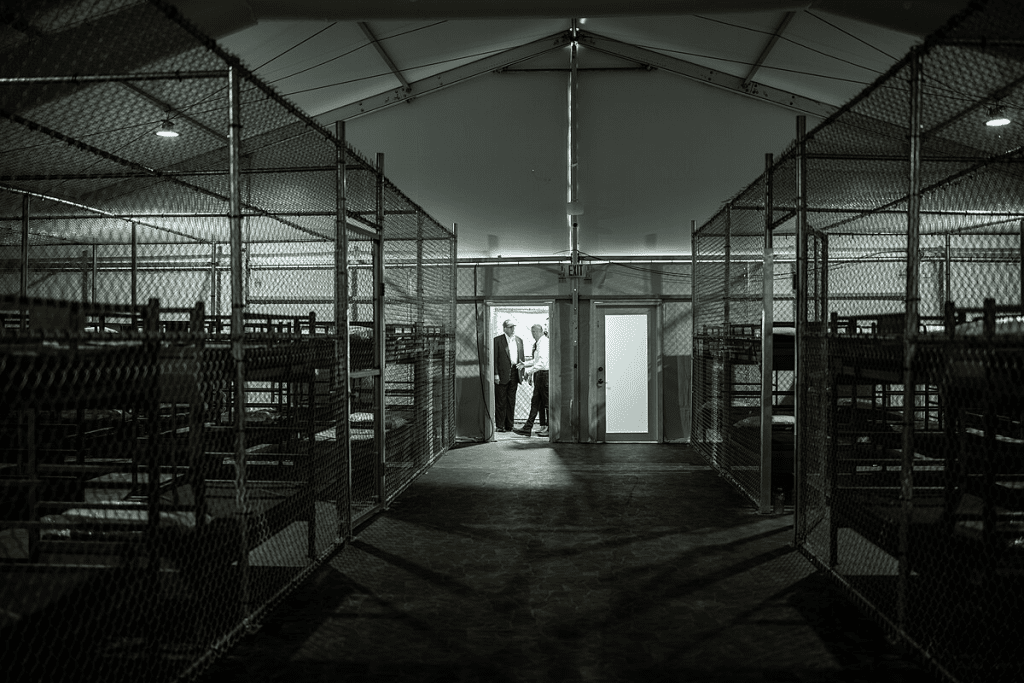
The opening of Florida’s “Alligator Alcatraz” detention facility in July 2025, a swamp-encircled site for undocumented immigrants, has elicited a provocative sentiment from some Americans: if they’d known “feeding illegals to gators” was on the ballot, they’d have voted twice for President Donald Trump. The hyperbolic phrase, rooted in the facility’s location amid Everglades wildlife, reflects the fervor of supporters who see Trump’s immigration policies as a long-overdue reckoning. Yet it also amplifies a heated debate over dehumanizing rhetoric, immigration enforcement, and the moral direction of a nation nearing its 250th year.
Located at the Dade-Collier Training and Transition Airport, “Alligator Alcatraz” is a 39-square-mile tent city designed to hold up to 5,000 detainees, surrounded by alligator- and python-filled swamps to deter escapes. Launched as part of Trump’s mass deportation agenda, which has seen 139,000 ICE arrests since January 2025, the facility embodies his promise to prioritize “criminal aliens.” Florida Governor Ron DeSantis, who championed the site, calls it a “cost-effective” solution, costing $450 million annually. Supporters, buoyed by Trump’s 2024 victory with 312 electoral votes, view it as a fulfillment of their vote, with 94% expressing no regret in a July 2025 poll. They argue it deters illegal immigration, pointing to a 2025 CBS News report that 40% of recent detainees have criminal convictions.
The “feeding to gators” rhetoric, while not literal, taps into a sentiment among some that harsh measures are justified. Proponents align it with Trump’s broader agenda—abolishing property taxes, ending Social Security taxes, and removing rainbow crosswalks—seeing it as a rejection of progressive policies. They argue that undocumented immigrants, estimated at 11 million by Pew Research in 2022, strain resources like Medicaid and SNAP, which Trump’s policies have cut for non-citizens. The sentiment echoes calls to deport pro-Iranian demonstrators and limit officeholders to U.S.-born citizens, reflecting a belief that only “true Americans” deserve priority.
Critics, however, condemn the rhetoric as dehumanizing and dangerous. The facility’s conditions—tents in hurricane-prone heat with limited legal access—have drawn lawsuits from groups like the Florida Immigrant Coalition, alleging violations of due process. Environmentalists and Indigenous advocates argue it desecrates sacred lands, while Democrats, barred from inspecting the site, call it a “human rights disaster.” A 2025 Washington Post editorial labeled the “gators” narrative “cruel theater,” noting that 71.7% of ICE detainees have no criminal record, per Transactional Records Access Clearinghouse data. Critics warn that such language risks inciting violence, especially after 2024 campaign-related incidents, and alienates allies critical of Trump’s policies, like the EU.
Logistically, “Alligator Alcatraz” faces hurdles. Operating in the Everglades during hurricane season, with storms forecast through August, poses safety risks. ICE’s 21,000 agents are stretched thin, and deporting millions could cost $315 billion, per the American Immigration Council, potentially offsetting economic gains like 3.2% unemployment. Legal challenges, citing violations of equal protection for non-criminal detainees, are pending, with a 2025 Supreme Court ruling on birthright citizenship signaling judicial scrutiny. The facility’s symbolism—tied to Trump’s “America First” ethos—may outweigh its practical impact, as only 3,000 detainees are currently housed there.
The rhetoric has political implications. With the 2026 midterms looming, Republicans aim to flip Senate seats in states like Michigan, leveraging immigration as a wedge issue. Democrats, backed by 49% disapproval of Trump’s agenda in a Pew poll, hope to rally voters against policies like “Alligator Alcatraz” and welfare cuts. The “feeding to gators” sentiment, while fringe, resonates with a base frustrated by decades of immigration debates, but it risks alienating moderates in battleground states like Florida, where 27% of residents are foreign-born.
As America grapples with its identity, the “Alligator Alcatraz” controversy encapsulates a nation divided. Supporters see it as a bold stand for sovereignty, echoing Trump’s tax cuts and cultural moves like “American Pride Month.” Critics view it as a moral failing, undermining the nation’s humanitarian legacy. Whether voters who “would’ve voted twice” for such policies remain a vocal minority or a growing force will shape the midterms and beyond. For now, the facility stands as a stark symbol of a country wrestling with compassion, security, and the consequences of its choices.
immigration policy details
border security measures
more neutral tone