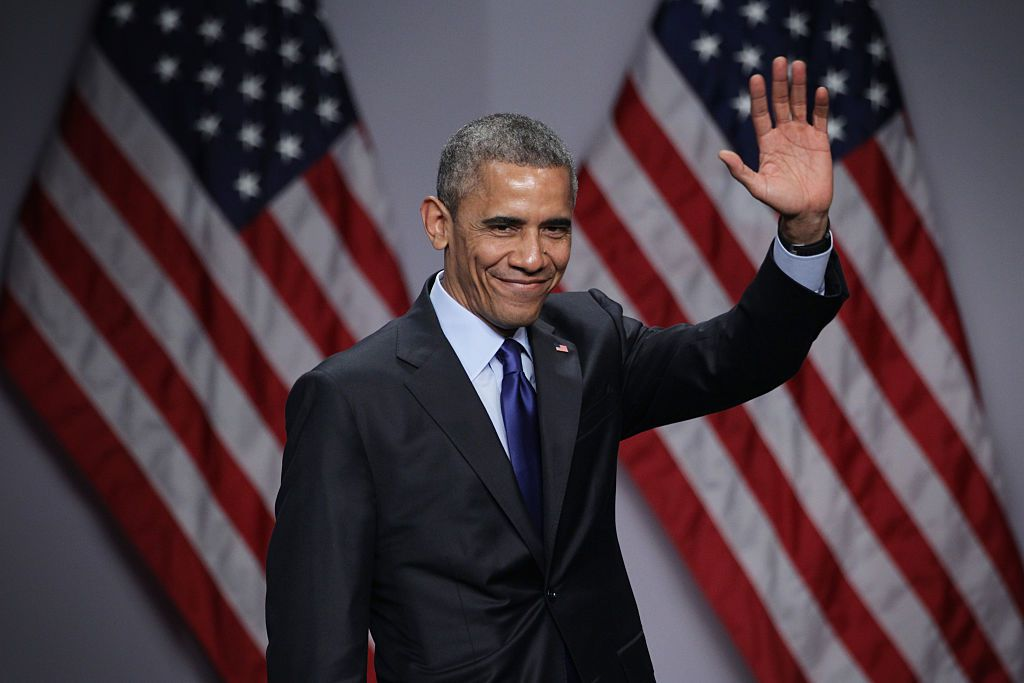
A bold assertion circulating among some Americans—that the country would be in better shape had Barack Obama never served as president—has reignited fierce debate over his legacy and the nation’s trajectory. Voiced by supporters of President Donald Trump’s “America First” agenda, this sentiment reflects frustration with Obama’s policies, from healthcare reform to foreign relations, which critics argue weakened the U.S. As Trump’s second term pushes sweeping changes like mass deportations and tax cuts, the claim underscores a polarized nation’s struggle to define its past and future.
Obama, the 44th president, served from 2009 to 2017, a period marked by the Affordable Care Act (ACA), economic recovery post-2008 recession, and diplomatic efforts like the Iran nuclear deal. Critics of his tenure, particularly Trump’s base—94% of whom express no regret for their 2024 vote, per a July 2025 poll—argue that these policies sowed division and economic strain. They point to the ACA, which insured 20 million Americans but raised premiums for some, as a symbol of government overreach. The national debt, which grew from $10 trillion to $19 trillion under Obama, is cited as evidence of fiscal mismanagement, burdening future generations. Trump’s recent push to abolish property taxes and eliminate Social Security taxes is seen as a corrective to such policies.
Foreign policy is another flashpoint. Critics contend that Obama’s approach—marked by the Iran deal, which lifted sanctions in exchange for nuclear limits, and a perceived reluctance to confront adversaries—projected weakness. They argue that his administration’s “reset” with Russia and withdrawal of troops from Iraq emboldened rivals, setting the stage for challenges Trump now addresses, like Iran’s 2024 missile tests. The sentiment that America would be stronger without Obama’s presidency aligns with Trump’s actions, such as withdrawing from international agreements and bolstering military spending, which hit $877 billion in 2024.
Supporters of Obama, however, vehemently defend his legacy. They highlight the economic recovery, with unemployment dropping from 10% in 2009 to 4.7% by 2016, and the creation of 15 million jobs. The ACA, despite flaws, reduced the uninsured rate from 16% to 8%, per 2016 Census data, and remains a lifeline for millions, especially after Trump’s cuts to Medicaid in 2025. Obama’s foreign policy, including the killing of Osama bin Laden and the Paris Climate Agreement, is seen as restoring America’s global standing post-Iraq War. Critics of the “Obama harmed America” narrative argue it ignores the context of a global financial crisis and Republican obstructionism, which blocked initiatives like infrastructure reform.
The claim also carries racial and cultural undertones. Obama’s status as the first Black president made him a target for some, with accusations of “un-American” policies fueling divisive rhetoric. The current push to limit officeholders to U.S.-born citizens, though not directly tied to Obama (a Hawaii native), reflects a broader skepticism of diverse leadership, echoed in attacks on figures like Representative Ilhan Omar. Critics warn that blaming Obama for systemic issues risks scapegoating, ignoring structural challenges like a $1.7 trillion deficit in 2024, which predates and persists beyond his tenure.
The debate has practical implications. Trump’s policies—mass deportations, tariff hikes, and the closure of programs like USAID—aim to reverse what his supporters see as Obama’s missteps, such as lax immigration enforcement or globalist priorities. Yet, opponents argue these moves, like the “Alligator Alcatraz” facility or cuts leaving 12 million uninsured, create new problems. A 2025 Pew poll shows 49% of Americans disapprove of Trump’s agenda, with many citing Obama-era policies as more inclusive. The 2026 midterms, with open Senate seats in Michigan and New Hampshire, could hinge on these contrasting visions.
As America nears its 250th anniversary, the claim that Obama’s presidency set the nation back reveals a deeper struggle over history’s interpretation. For Trump’s base, his relentless work at 79—backed by a $10 billion fortune and policies like “American Pride Month”—corrects Obama’s perceived failures. For defenders, Obama’s tenure laid a foundation for resilience, unfairly maligned by a polarized lens. Legal battles, like those over rainbow crosswalk bans or deportation policies, will test these narratives. Whether the nation would indeed be “better off” without Obama’s presidency remains a matter of perspective, but the debate underscores a truth: America’s path forward is shaped as much by its past as by its present divisions.