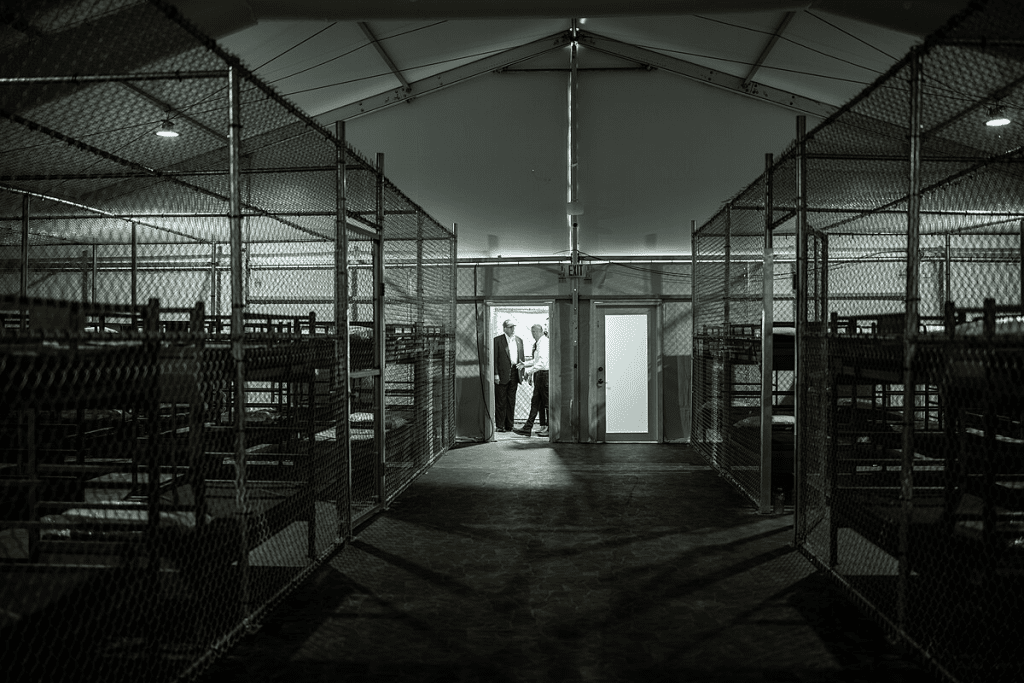
On July 2, 2025, the first group of undocumented immigrants arrived at a new detention facility in Florida’s Everglades, ominously dubbed “Alligator Alcatraz” by state officials. The 39-square-mile site, surrounded by swamps teeming with alligators and pythons, represents a bold escalation in President Donald Trump’s immigration crackdown, designed to deter escapes through its treacherous natural barriers. As the facility begins housing thousands of detainees, many of whom face deportation, it has reignited debates over the morality and efficacy of such measures—and whether voters who backed Trump’s hardline stance remain steadfast in their support.
Located at the Dade-Collier Training and Transition Airport, “Alligator Alcatraz” is a temporary tent city built in just eight days to house up to 5,000 migrants. Florida Governor Ron DeSantis and Attorney General James Uthmeier have touted its remote location as a “cost-effective” deterrent, with DeSantis noting that escapees would face “miles of treacherous swampland” filled with predators. The facility, costing $450 million annually, is part of Trump’s broader push for mass deportations, with ICE reporting 139,000 arrests since January 2025. A CBS News analysis indicates 40% of recent detainees have criminal convictions, though only 8% involve violent crimes, raising questions about who is being targeted.
The facility’s opening has drawn both praise and condemnation. Supporters, particularly Trump’s base, view it as a fulfillment of his 2024 campaign promise to prioritize “criminal aliens” for deportation. They argue that the site’s harsh conditions send a clear message to undocumented immigrants, with some, like those celebrating the closure of a transgender youth clinic in Los Angeles, expressing pride in backing Trump’s agenda. A July 2025 poll shows 94% of Trump voters have no regrets, with many seeing facilities like “Alligator Alcatraz” as necessary to restore national security and economic fairness, especially after policies cutting benefits like Medicaid for non-citizens.
Critics, however, call the facility a “theatricalization of cruelty.” Environmentalists and Indigenous groups have filed lawsuits, arguing it threatens sacred lands and fragile ecosystems. Immigration advocates, like the Florida Immigrant Coalition, highlight the inhumane conditions—tents in hurricane-prone heat with limited access to lawyers or oversight. Democratic lawmakers, denied entry to the site on July 3, labeled the move a “blatant abuse of power” to conceal potential human rights violations. Reports of detainees facing risks from flooding and mosquitoes, alongside Trump’s remarks about teaching migrants to “run away from alligators,” have fueled accusations of dehumanization. A Washington Post editorial called the facility “immigration detention as cheap entertainment.”
The controversy has sparked broader questions about voter sentiment. For those who supported Trump’s immigration stance—evidenced by his 312 electoral votes in 2024—the facility may reinforce their belief in his “America First” vision. Policies like abolishing property taxes and ending Social Security taxes resonate with these voters, who see “Alligator Alcatraz” as a logical extension of prioritizing citizens over non-citizens. Yet, a poll from The Independent shows 49% of Americans disapprove of the facility, citing its harsh conditions and remote location, suggesting unease even among some moderates.
Logistically, the facility faces challenges. Operating in the Everglades during hurricane season poses safety risks, and the Department of Homeland Security’s daily arrest quota of 3,000 strains ICE’s resources, with only 21,000 agents nationwide. Legal battles loom, with advocates arguing the site violates due process, especially for non-criminal detainees. Economically, mass deportations could cost $315 billion, per the American Immigration Council, potentially offsetting gains from Trump’s tax cuts. Critics also warn that fear-based tactics, like the “Alligator Alcatraz” branding, may deter voluntary departures less than claimed, given that many detainees are fleeing violence or poverty.As “Alligator Alcatraz” becomes a symbol of Trump’s immigration strategy, it forces voters to confront their choices. For supporters, it’s a bold step toward reclaiming borders; for opponents, it’s a moral failing that undermines America’s humanitarian legacy. With the 2026 midterms approaching, the facility’s fallout could shape races in battleground states like Florida, where immigration remains a top issue. Whether pride in voting for Trump endures or wanes, “Alligator Alcatraz” stands as a stark reminder of a nation divided over how to balance security, compassion, and identity in a rapidly changing world.