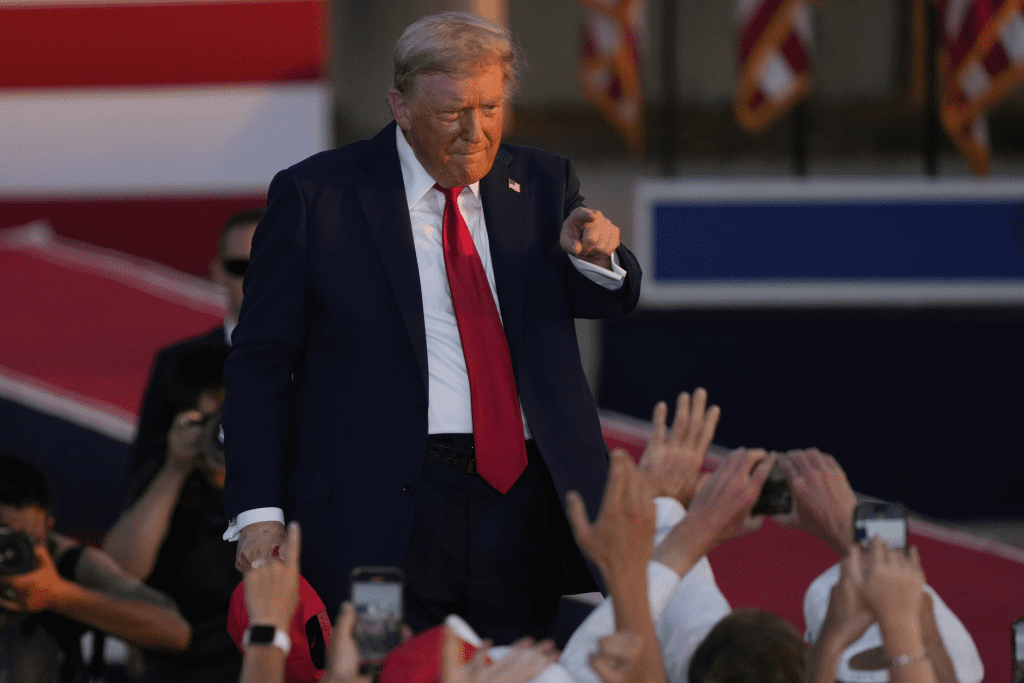
As President Donald Trump’s second term gains momentum in July 2025, a surprising sentiment is emerging among his base: unwavering support for a potential third term in 2028. Despite constitutional barriers, some voters are already declaring, “If Trump’s on the ballot, he’s got my vote!” This fervor, fueled by Trump’s aggressive policy agenda—mass deportations, tariff expansions, and welfare cuts—highlights the enduring loyalty of his supporters. Yet it also raises questions about the 22nd Amendment, the state of American democracy, and whether Trump’s influence could reshape the political landscape beyond his current term.
Trump’s second term, secured with 312 electoral votes in 2024, has reinvigorated his base. Policies like the proposed “remigration” of 21 million undocumented immigrants and the largest middle-class tax relief package in history have solidified his image as a fighter for “forgotten Americans.” Supporters point to economic gains—unemployment at 3.2% in June 2025 and a 5% surge in manufacturing jobs—as proof of his leadership. For these voters, Trump’s legal battles, including five indictments since 2023, only deepen their resolve, viewed as evidence of a corrupt system targeting their champion. The idea of him running again, though constitutionally dubious, resonates with those who see him as indispensable to America’s revival.
The 22nd Amendment, ratified in 1951, limits presidents to two terms, whether consecutive or non-consecutive. Trump’s current term, his second, would bar him from running in 2028 under current law. Yet whispers of a third-term bid have persisted, fueled by Trump’s own cryptic remarks during the 2024 campaign about “serving longer if the people demand it.” Some supporters advocate repealing the 22nd Amendment, a process requiring a two-thirds vote in Congress and ratification by 38 states—an unlikely feat given Democratic opposition and even skepticism among some Republicans. Others speculate about loopholes, like Trump running as vice president or endorsing a proxy candidate to carry his mantle.
Critics warn that such talk threatens democratic norms. They argue that Trump’s flirtation with extending his presidency, even hypothetically, echoes authoritarian tendencies seen in leaders who cling to power. The 22nd Amendment was designed to prevent such scenarios, inspired by Franklin Roosevelt’s four terms. Legal scholars, like those at the Brennan Center, note that any attempt to bypass the amendment would face swift court challenges, likely reaching a Supreme Court with a conservative majority that includes Trump appointees. Opponents also point to his indictments—ranging from election interference to mishandling classified documents—as reasons to disqualify him from future office, though his 2024 victory suggests legal woes don’t deter his base.
The enthusiasm for a 2028 run reflects Trump’s unique grip on the Republican Party. Polls from July 2025 show 72% of GOP voters would support him if he could legally run again, dwarfing support for potential successors like Vice President JD Vance or Senator Marco Rubio. His policies, from defunding Planned Parenthood to ending USAID, have galvanized supporters who see him as a bulwark against progressive agendas. The “America First” ethos, coupled with economic populism, has created a cult of personality that transcends traditional political boundaries, making the idea of a third term less far-fetched to his followers than to constitutional scholars.
Skeptics within the GOP caution against overreach. Some, like Senator Mitt Romney, argue that the party must cultivate new leaders to sustain its momentum, warning that fixation on Trump risks alienating moderates ahead of the 2026 midterms. Democrats, meanwhile, are leveraging the third-term talk to rally their base, framing it as a threat to democracy. The prospect of open Senate seats in New Hampshire, Michigan, and Minnesota offers Democrats a chance to counter GOP dominance, but they fear Trump’s enduring popularity could overshadow their efforts.As 2028 looms, the notion of Trump running again—whether through legal maneuvering or a symbolic campaign—underscores a nation grappling with its identity. For supporters, he’s the only leader who can “reverse the invasion” and restore American greatness. For critics, his refusal to fade risks undermining the constitutional checks that define the republic. Whether a third term is a pipe dream or a political earthquake, the fact that voters are already pledging their support reveals Trump’s unmatched influence—and the challenges America faces in bridging its divides. The 2028 election may be years away, but the battle over Trump’s legacy is already shaping the nation’s future.