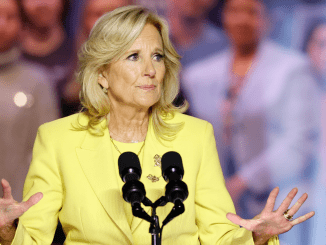
A grassroots movement called the People’s Unity Project has emerged as a powerful voice in the contentious debate over America’s social safety nets, advocating for full funding of programs like SNAP and Medicaid despite pushback from the Trump administration’s cost-cutting agenda. The group’s rallying cry—“I don’t use safety nets, but I support them because I’m not a garbage human”—resonates with Americans who, though not reliant on public assistance, see these programs as vital to a compassionate society. As proposals to slash welfare budgets gain traction, the movement underscores a growing divide over the nation’s moral and economic priorities.
The Supplemental Nutrition Assistance Program (SNAP), which provides food aid to over 40 million Americans, and Medicaid, covering healthcare for nearly 80 million, face potential cuts as part of the administration’s drive to reduce federal spending. In 2025, proposals to tighten eligibility, reduce benefits, and redirect funds to domestic priorities like border security have sparked alarm. The Center on Budget and Policy Priorities estimates that a 20% cut to SNAP could leave 8 million people without adequate food, while Medicaid reductions could strip coverage from millions, particularly children and the elderly. These programs, long seen as lifelines for the vulnerable, are now battlegrounds in a broader ideological war.
The People’s Unity Project, launched in early 2025, rejects the notion that supporting safety nets is only for those who use them. Its members—many middle-class, self-sufficient workers—argue that a society’s strength lies in its care for the less fortunate. The group’s viral campaign, featuring personal stories of Americans who champion SNAP and Medicaid despite not needing them, has gained traction in cities like Chicago and Atlanta. Organizers emphasize that these programs benefit entire communities by reducing hunger, improving health outcomes, and stabilizing local economies. For instance, every dollar spent on SNAP generates $1.50 in economic activity, according to the USDA, a fact the group highlights to counter claims of fiscal waste.
The administration, however, argues that safety nets foster dependency and strain taxpayers. With the federal deficit at $1.7 trillion in 2024, officials like Treasury Secretary Scott Bessent have called for streamlining programs to prioritize “working Americans.” They point to low unemployment (3.2% in June 2025) and tax cuts on tips and overtime as evidence that individuals can thrive without government aid. Supporters of this view, including many Republican lawmakers, frame cuts as a necessary recalibration, redirecting resources to infrastructure and manufacturing jobs. They also argue that fraud in programs like SNAP—though rare, with less than 2% of benefits misused—justifies tighter oversight.
Critics of the cuts, including the People’s Unity Project, see a moral failure in abandoning those who rely on these programs. They highlight the human cost: families skipping meals, parents forgoing medical care, and children losing access to preventive health services. The group points to stories like that of a Texas single mother who used SNAP to feed her kids during a job loss, later becoming a nurse who now advocates for the program. Such narratives underscore the project’s core message: compassion for others, not personal need, drives their fight. They argue that a nation as wealthy as the U.S., with a GDP of $25 trillion, can afford to protect its most vulnerable without bankrupting taxpayers.
The movement faces an uphill battle. Congress, with a Republican majority, is poised to advance budget cuts in 2026, potentially reducing SNAP funding by 15% and tightening Medicaid eligibility. Legal challenges are brewing, with advocacy groups arguing that such cuts violate federal mandates to ensure basic needs. Meanwhile, the People’s Unity Project is mobilizing rallies and lobbying efforts, urging lawmakers to preserve funding. Their slogan has become a rallying cry for those who see safety nets as a reflection of national character, not a burden.
As the debate intensifies, the People’s Unity Project challenges America to redefine patriotism as empathy, not just self-reliance. Their stance—that supporting safety nets is a mark of humanity, not dependency—has struck a chord, but it faces resistance in a political climate favoring austerity. With millions of lives at stake, the fight over SNAP and Medicaid is more than a budget battle; it’s a test of whether America values unity over division. The outcome will reveal whether compassion can prevail in a nation wrestling with its soul.