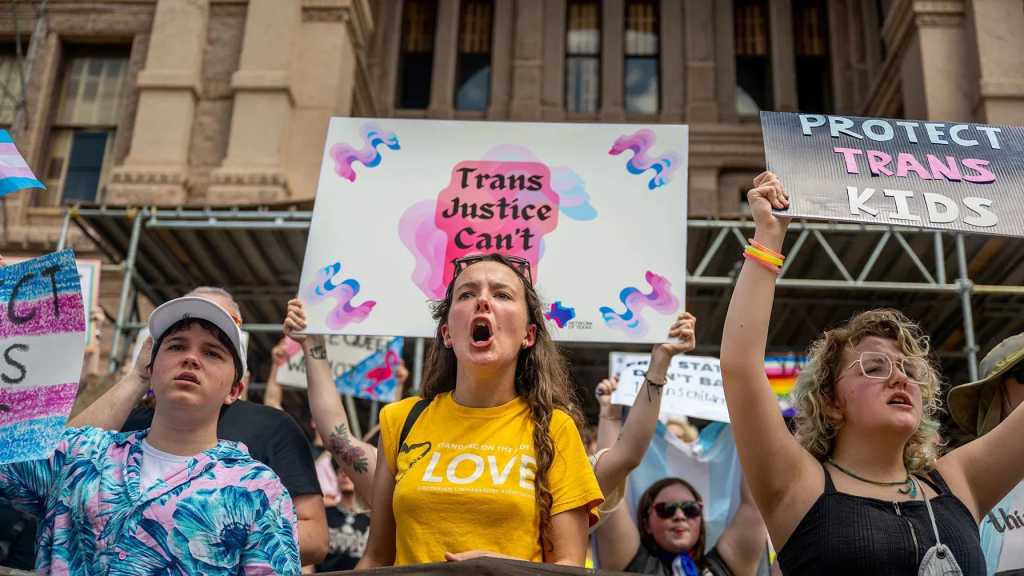
A growing number of transgender Americans are contemplating leaving the United States, citing fears over President Donald Trump’s aggressive anti-transgender policies as a driving force. Reports from early 2025 indicate that many in the transgender community, facing restrictions on healthcare, identity documents, and military service, are actively planning to relocate abroad or have already done so. The exodus, fueled by executive orders and a shifting political climate, underscores a deepening divide over transgender rights, raising questions about America’s commitment to inclusivity as the 2026 midterms approach.
Since Trump’s inauguration on January 20, 2025, his administration has issued a series of directives targeting transgender individuals. On his first day, Trump signed an executive order declaring that the U.S. recognizes only two genders—male and female—based on biological sex, labeling gender transitions as “false claims.” This was followed by orders banning federal funding for gender-affirming care for youth, prohibiting transgender military service, and suspending passport applications for gender marker changes. Secretary of State Marco Rubio’s directive to bar transgender visa applicants for “misrepresenting” their sex has further heightened fears, with some transgender Americans worried about being unable to travel or return home. A 2025 Los Angeles Times report noted that these policies have prompted many to save money, secure travel documents, or apply for asylum abroad.
The scale of the response is striking. Rainbow Railroad, a nonprofit aiding LGBTQ+ individuals fleeing persecution, reported 1,117 requests for help from U.S. citizens in a single day after the 2024 election, with 51% from transgender individuals seeking international relocation. This surpasses even the peak of requests during the 2021 Afghanistan crisis. Destinations like Canada, Norway, Spain, and New Zealand, known for progressive transgender protections, are top choices. For instance, a 46-year-old software engineer from San Diego, Alexia Nunez, fled to Canada after Rubio’s passport directive, fearing her expiring passport would no longer reflect her female identity. Similarly, families like Brandon and Candace from Denver are spending tens of thousands to move to New Zealand to protect their 9-year-old transgender daughter.
Critics of the administration, including the American Civil Liberties Union, argue that these policies constitute a systematic effort to “erase” transgender existence, pushing many to feel unsafe in their own country. A 2023 Data for Progress survey found 8% of transgender adults had already relocated due to discriminatory laws, with 43% considering it, a trend that has accelerated under Trump’s second term. The Supreme Court’s 2025 U.S. v. Skrmetti ruling, upholding bans on youth gender-affirming care, has further fueled fears, with transgender individuals like Wayne, a 48-year-old from Washington state, planning to move to Spain by summer’s end. The ruling, combined with state-level restrictions in 25 states covering 37% of transgender youth, has led some to describe the U.S. as an “electoral autocracy” for transgender citizens.
Supporters of Trump’s policies, however, argue they protect national standards and public safety. The administration, backed by 94% of its 2024 voters per a June 2025 Rasmussen poll, frames transgender issues as a distraction from priorities like border security and economic growth. Figures like Defense Secretary Pete Hegseth defend the military ban, claiming transgender service members undermine “readiness.” A 2025 Gallup poll shows 42% of Americans oppose transgender healthcare access, with 78% of Republicans supporting restrictions, reflecting a significant divide in public opinion.
The practical challenges of leaving are daunting. Relocation is costly, and asylum claims by U.S. citizens are rarely accepted abroad due to the “safe country” designation, as seen in Canada’s rejection of a transgender American’s claim in 2024. Yet, stories of families selling possessions or crowdfunding moves, like Sandra from Texas raising $6,000 for a West Coast relocation, highlight the desperation. Others, like Hazel from Texas, cite safety concerns, unable to change gender markers on documents.
As transgender Americans weigh their options, the trend signals a broader crisis of confidence in the U.S. as a haven for all citizens. While some dismiss the exodus as an overreaction, the fear of persecution is palpable, with parallels drawn to historical displacements. Whether this wave of emigration grows or subsides, it underscores a nation grappling with identity, rights, and the meaning of freedom in a polarized era.