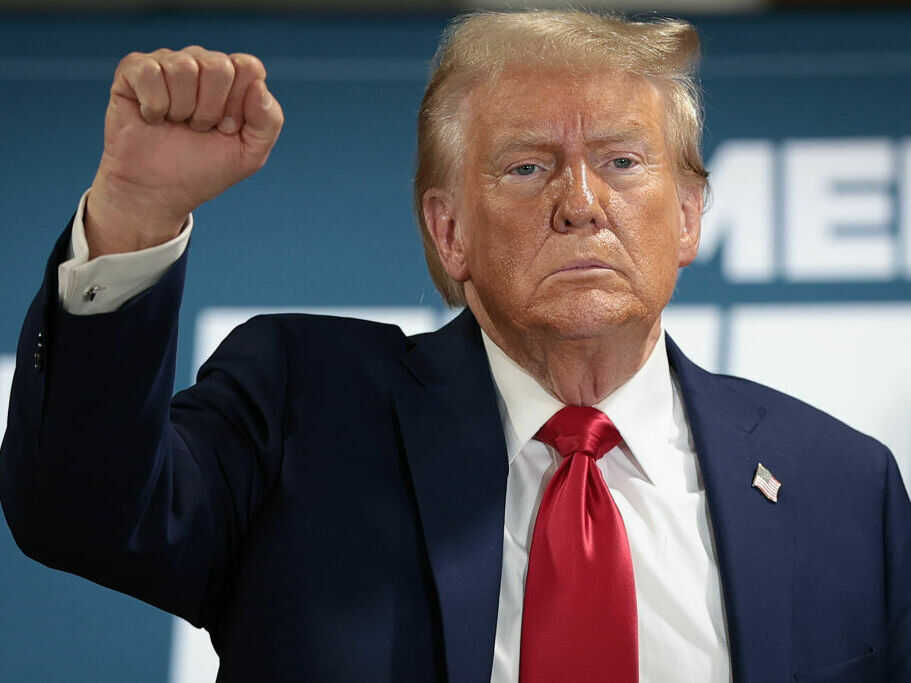
President Donald Trump has reignited one of the most contentious debates in American politics, declaring that birthright citizenship—guaranteed by the 14th Amendment—should be reinterpreted or abolished. In a fiery speech on June 28, 2025, Trump argued that the policy, which grants citizenship to anyone born on U.S. soil, was intended solely for the children of freed slaves, not for those “gaming the system.” His remarks, delivered at a rally in Phoenix, Arizona, have sparked outrage, legal challenges, and a polarized national conversation about immigration, identity, and constitutional rights.Trump’s comments target a cornerstone of American law: the 14th Amendment, ratified in 1868, which states that “all persons born or naturalized in the United States, and subject to the jurisdiction thereof, are citizens.” For over a century, this has ensured automatic citizenship for babies born in the U.S., regardless of their parents’ status. Trump contends this provision is being exploited, particularly by undocumented immigrants and those engaging in “birth tourism”—where pregnant women enter the U.S. to give birth, securing citizenship for their children. “It was meant for the babies of slaves, to right a historic wrong,” Trump declared. “Not for people sneaking across borders or flying in to scam our system.”The administration’s push to curb birthright citizenship is not new. During his first term, Trump floated the idea of ending it via executive order, a move legal scholars dismissed as unconstitutional. Now, with a bolstered mandate in his second term, Trump appears emboldened. His Department of Homeland Security, led by Secretary Kristi Noem, is reportedly drafting policies to challenge the application of birthright citizenship, possibly by denying passports or benefits to children of non-citizens. The White House has also signaled plans to seek a Supreme Court review, hoping to reinterpret the 14th Amendment’s “jurisdiction” clause to exclude undocumented immigrants.Critics argue Trump’s stance misrepresents history and threatens a fundamental American principle. The 14th Amendment was indeed crafted to secure citizenship for freed slaves after the Civil War, but its language is deliberately broad, reflecting a commitment to equality under the law. “This isn’t just about history—it’s about who we are as a nation,” said California Governor Gavin Newsom, who vowed to sue if the administration moves forward. Legal experts, including Georgetown University’s Neal Katyal, assert that altering birthright citizenship would require a constitutional amendment, a process needing two-thirds approval from Congress and ratification by 38 states—an uphill battle.Supporters, however, see Trump’s position as a necessary correction. They argue that birthright citizenship incentivizes illegal immigration, straining public resources. The Federation for American Immigration Reform estimates that 300,000 children of undocumented immigrants are born in the U.S. annually, costing taxpayers billions in healthcare and education. “Why should someone who breaks our laws get a free pass for their kids?” asked Representative Matt Gaetz, a vocal Trump ally. Proponents also point to other nations, like Australia and the UK, which have restricted birthright citizenship, as models for reform.The debate is already reshaping the political landscape. Immigrant advocacy groups have mobilized protests in cities like Los Angeles and New York, while conservative lawmakers are drafting bills to support Trump’s agenda. Public opinion is split: a June 2025 Pew Research poll found 54% of Americans favor maintaining birthright citizenship, but 62% of Republicans support restrictions. The issue could dominate the 2026 midterms, forcing candidates to take sides in a deeply divisive fight.Trump’s remarks also carry global implications. Allies like Canada, which also has birthright citizenship, are watching closely, while critics abroad warn of a slide toward exclusionary nationalism. Domestically, the policy risks alienating communities of color, who see it as an attack on their place in America’s fabric. As legal battles loom, the Supreme Court—now with a conservative supermajority—may ultimately decide the issue, potentially reshaping citizenship for generations.Trump’s slam on birthright citizenship is more than rhetoric; it’s a challenge to America’s identity. Is the nation a beacon of opportunity, or a fortress to be guarded? The answer will define not just his presidency, but the soul of the country.