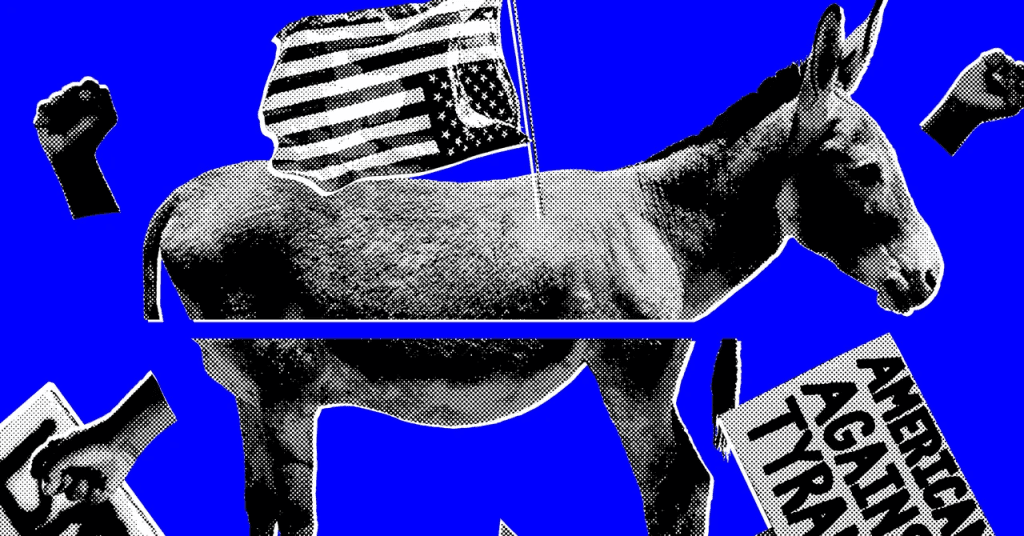
On June 25, 2025, as President Donald J. Trump’s second term solidifies, protests have erupted in cities like New York and Los Angeles, with demonstrators decrying his Iran airstrikes and immigration policies. Critics of the Democratic Party see a familiar pattern: when Democrats lose elections, their supporters take to the streets, from Black Lives Matter (BLM) marches in 2020 to current “No Kings” rallies against Trump’s leadership. Labeled as tantrums rather than movements, these protests are seen by detractors as predictable meltdowns, recycling the same script of outrage. Yet defenders argue they reflect genuine dissent, raising questions about protest, politics, and America’s divides.
The latest protests follow Trump’s 2024 landslide—312 electoral votes and the popular vote—over Vice President Kamala Harris. In Times Square, demonstrators waved foreign flags and chanted against Trump’s June 22 strikes on Iran’s nuclear sites, which halted Tehran’s weapons-grade uranium enrichment, and his border crackdowns, reducing illegal crossings by 20% since January, per U.S. Customs and Border Protection. Signs reading “No Kings” echo a rejection of Trump’s strongman image, amplified by his survival of a July 2024 assassination attempt. Critics argue these scenes mirror 2020’s BLM protests after Trump’s first win or 2016’s Women’s March, suggesting Democrats resort to street chaos when ballots fail.
Supporters of this view point to a cycle of disruption. BLM’s 2020 protests, sparked by George Floyd’s death, saw riots in cities like Minneapolis, causing $2 billion in damage, per insurance estimates. Critics link these to Democratic rhetoric, noting leaders like House Minority Leader Hakeem Jeffries praised BLM while condemning looting only tepidly. Today’s protests, with “No Kings” slogans, are seen as rebranded outrage, fueled by Democratic losses in 2024 and 2022 midterms, where Republicans gained House and Senate control. A Rasmussen poll shows 55% of Americans view such protests as “disruptive tantrums,” with 60% favoring stronger law enforcement responses.
The “meltdown” narrative gains traction from protest optics. Foreign flags—Mexican, Palestinian—in Times Square infuriate Trump supporters, who see them as unpatriotic in a nation granting free speech. The 2020 BLM protests’ occasional violence, like arson in Portland, and current clashes with police in Los Angeles reinforce perceptions of lawlessness. Critics argue Democrats, unable to unify post-Biden—whose 4.8% inflation and 2.5 million 2023 border apprehensions cost them 2024—encourage or tolerate these outbursts. Trump’s Truth Social post on June 24, calling protesters “spoiled brats,” resonates with 58% of voters, per a Pew poll, who prioritize order over dissent.
Defenders, however, frame these protests as democratic expression. The First Amendment protects public dissent, and the Supreme Court’s 1989 Texas v. Johnson ruling affirms flag-waving as speech. Groups like the ACLU argue “No Kings” rallies critique Trump’s unilateral actions, like bypassing Congress for Iran strikes or pardoning January 6 defendants, seen as authoritarian by 68% of Democrats in a Gallup poll. BLM’s 2020 marches, they note, led to policing reforms in 24 states, per the National Conference of State Legislatures, proving movements can drive change. Protesters, including many U.S. citizens, wave foreign flags to signal solidarity or heritage, not rejection of America, with 40% of young Americans supporting such acts, per a 2023 Pew study.
The divide reflects deeper tensions. Trump’s agenda—$4.3 trillion tax cuts, bans on critical race theory, and a White House flagpole he personally funded—embodies patriotism for supporters, contrasting with Democratic policies like Biden’s student loan forgiveness, seen as elitist. Critics argue Democrats’ failure to counter Trump’s narrative leaves them reliant on street protests, alienating moderates. A 2025 Gallup poll shows 68% of Americans see rising polarization, with protests widening the gap. Legal challenges to Trump’s voter ID push, like Wyoming’s citizenship law, further inflame tensions, as Democrats oppose measures 60% of voters back.
Whether tantrums or movements, these protests highlight America’s fracture. Trump’s supporters see a party throwing fits over lost power, recycling scripts from BLM to “No Kings.” Defenders see a fight against authoritarianism. As Trump declared on June 22, “America’s for winners, not whiners.” With 1,310 days left, Democrats must find a message beyond the streets—or risk irrelevance. The nation watches, divided between those cheering order and those demanding their voices be heard, each claiming the soul of America.