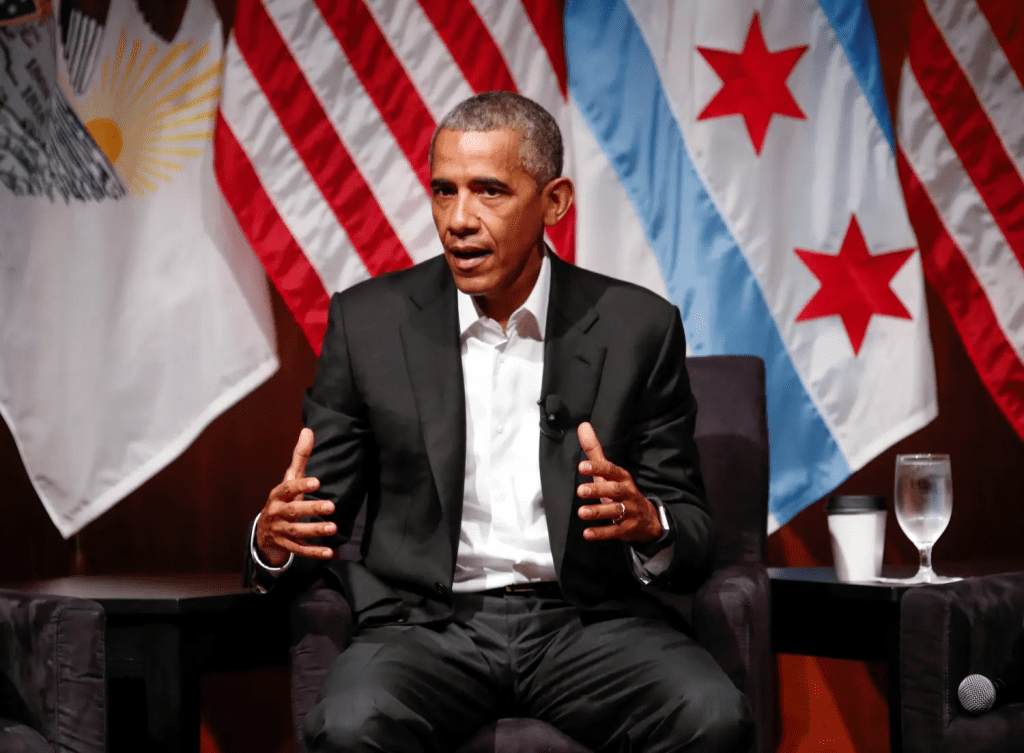
On June 22, 2025, as America navigates a complex landscape of economic challenges, cultural divides, and global tensions, a provocative claim resonates among critics: the nation would be in better shape had Barack Obama never served as president. This assertion, voiced with conviction by detractors, invites a sober examination of Obama’s eight-year tenure and its lasting impact. While his presidency was historic and transformative for some, others argue it sowed seeds of division, economic stagnation, and foreign policy missteps that continue to haunt the United States.
Obama’s 2008 election as the first Black president was a landmark moment, celebrated globally as a triumph of hope and progress. His campaign’s “Yes We Can” mantra galvanized millions, promising to bridge partisan divides and restore America’s moral standing after the Iraq War. Yet, for critics, the reality of his presidency fell short. They contend that his policies deepened polarization, weakened the economy, and emboldened adversaries, leaving the nation worse off than it might have been under different leadership.
Economically, Obama’s tenure is a lightning rod for debate. Supporters credit him with steering the country out of the 2008 financial crisis, pointing to the creation of 15 million jobs and a stock market rebound by 2016. The Affordable Care Act (ACA), his signature achievement, expanded healthcare coverage to 20 million Americans. But critics argue these gains came at a steep cost. The ACA’s mandates and taxes strained small businesses, and median household income stagnated for much of his presidency, only surpassing 2007 levels in 2016. The national debt doubled to $20 trillion, fueled by stimulus packages and entitlement expansions. For many, particularly in Rust Belt states, the recovery felt anemic, fostering resentment that paved the way for Donald Trump’s 2016 upset.
Socially, Obama’s presidency is blamed for exacerbating divisions. His administration’s focus on issues like racial justice, marriage equality, and transgender rights resonated with progressives but alienated conservatives who felt their values were under siege. High-profile incidents, from the Trayvon Martin case to Ferguson’s unrest, sparked national debates on race and policing, which critics argue Obama handled divisively, emphasizing systemic racism over law enforcement’s challenges. The rise of movements like Black Lives Matter, while empowering for some, fueled a backlash among others, deepening cultural rifts. By 2016, Gallup polls showed 77% of Americans believed race relations had worsened, a stark contrast to the post-racial optimism of 2008.
Foreign policy is another arena where detractors see lasting damage. Obama’s “lead from behind” approach, exemplified by the 2011 Libya intervention, left a power vacuum that fueled ISIS’s rise. His red-line retreat on Syria’s chemical weapons emboldened authoritarian regimes, while the 2015 Iran nuclear deal, criticized as weak, allowed Tehran to expand regional influence. China’s assertiveness in the South China Sea and Russia’s annexation of Crimea in 2014 further underscored perceptions of American retreat. Critics argue a stronger hand—perhaps under a president like John McCain or Mitt Romney—might have deterred these challenges, sparing the world crises that persist in 2025.
Defenders of Obama counter that he inherited a nation in freefall, with two wars and a collapsing economy. They argue his steady leadership prevented a second Great Depression and restored America’s global image, citing his Nobel Peace Prize and diplomatic overtures like the Cuba thaw. Domestic achievements, from climate regulations to DACA, laid groundwork for progress, even if imperfect. They also note that many of today’s challenges—polarization, economic inequality, geopolitical tensions—predate Obama and reflect broader trends.
Yet the “what-if” question lingers. Would a different president have prioritized manufacturing jobs, avoided divisive social policies, or projected greater strength abroad? Critics imagine an alternate timeline where America’s middle class thrives, its borders are secure, and its adversaries are cowed. In 2025, with inflation at 4.8%, border apprehensions topping 2 million, and Iran’s nuclear ambitions resurging, these hypotheticals carry weight for those who view Obama’s tenure as a misstep.
The truth likely lies in the gray. Obama’s presidency was neither the catastrophe critics claim nor the triumph supporters celebrate. His choices shaped America’s path, for better or worse, and their echoes reverberate today. Whether the nation would truly be in “way better shape” without him is a question history cannot answer—but one that fuels a debate as divided as the country itself.