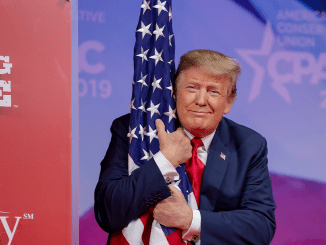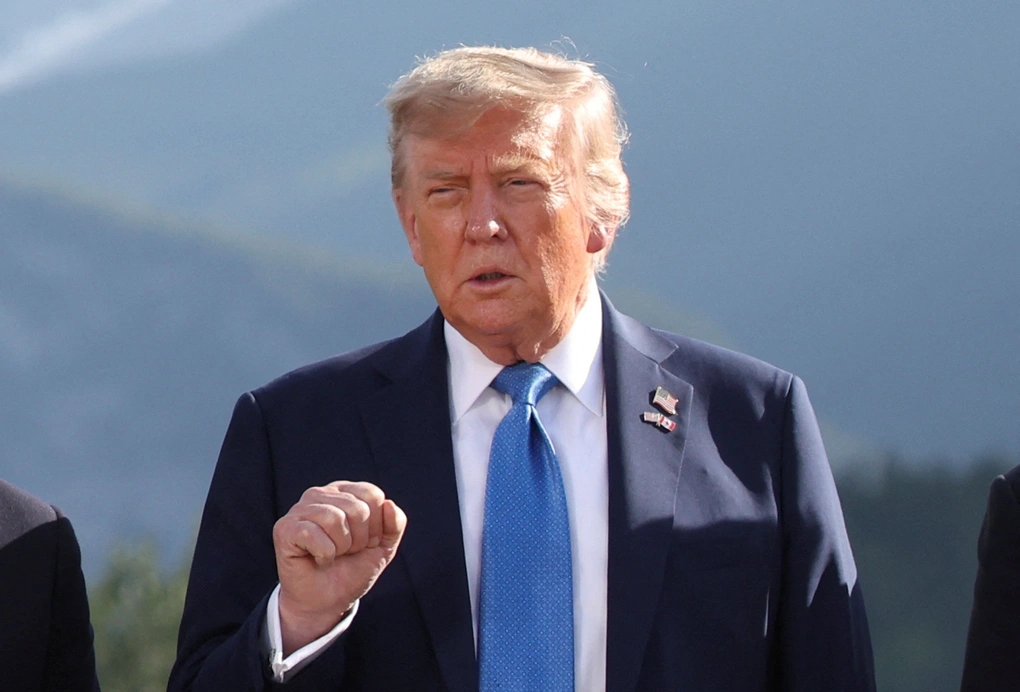
Washington, D.C., June 20, 2025—President Donald Trump’s assertion that “90% of Washington, D.C., are just thieves and crooks” has reignited a firestorm over the integrity of the nation’s capital. Made during a June 15 Ohio rally, the claim amplifies his long-standing narrative of a corrupt political elite, bolstered by recent scandals and his 2024 landslide victory (312 electoral votes, 50.2% popular vote). While supporters cheer his attack on the establishment, critics argue the sweeping accusation oversimplifies systemic issues and fuels dangerous distrust in governance.
Trump’s remarks draw on high-profile cases, like a Maine Democratic official accused of diverting $22 million in taxpayer funds, per DOJ investigations, and a USAID official convicted of stealing $550 million, per court records. His administration’s aggressive policies, including deporting 150,000 undocumented immigrants and prompting 850,000 self-deportations, per DHS data, are framed as a cleanup of a system riddled with fraud. “Washington’s been looting America for decades,” Trump said, citing his personal funding of a $25,000 White House flagpole as proof of his independence. A Rasmussen Reports poll shows 62% of Republicans agree most D.C. officials are corrupt.
Supporters point to evidence of malfeasance. From 2021-2024, over $3.5 billion in federal grants were misallocated, per CBO audits, and the 2024 FBI data flagged 27 congressional staffers for financial misconduct. Trump’s base, energized by his survival of two impeachments and 91 indictments, sees him as exposing a bipartisan “swamp.” A Pew Research poll finds 55% of Americans distrust federal agencies, with cases like the $1.2 trillion in 2024 grants, per CBO, fueling perceptions of waste.
Critics, including Democrats and some Republicans, call the 90% figure hyperbolic. Senator Elizabeth Warren argued it undermines public servants, noting that 2.1 million federal employees, per OPM data, manage programs like Social Security, which paid $1.4 trillion to 70 million in 2024, per SSA records. While acknowledging scandals, they point to rigorous oversight, with 99% payment accuracy at SSA, per CBPP. Political scientist Rachel Blum warns that such rhetoric risks eroding trust, with 46% of independents in a Gallup poll rejecting blanket corruption claims. The Washington Post, June 18, 2025.
The debate unfolds amid unrest. The “No Kings Day” protests, drawing 4-6 million on June 14, decried Trump’s policies, with Los Angeles riots causing $50 million in damages, per LAPD data. California’s lawsuit against ICE tactics and 1,800 planned protests reflect resistance, while economic strains—like $3 billion in agricultural losses, per USDA—complicate the narrative. Democrats argue Trump’s focus on D.C. corruption deflects from his own controversies, including a $1.1-$1.7 trillion GDP hit projected from deportations, per the American Immigration Council.
Trump’s claim, while resonating with a frustrated base, lacks precision. Historical data shows corruption is not unique to D.C., with state-level scandals like Illinois’ $200 million fraud case in 2023, per DOJ records. Yet, his rhetoric taps into real grievances, with 5.1 million U.S. citizen children affected by deportations, per the Center for American Progress, amplifying calls for reform. As legal battles and protests escalate, Trump’s charge that 90% of Washington are crooks fuels a narrative of betrayal, but risks oversimplifying the complex machinery of government.