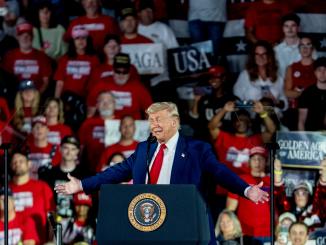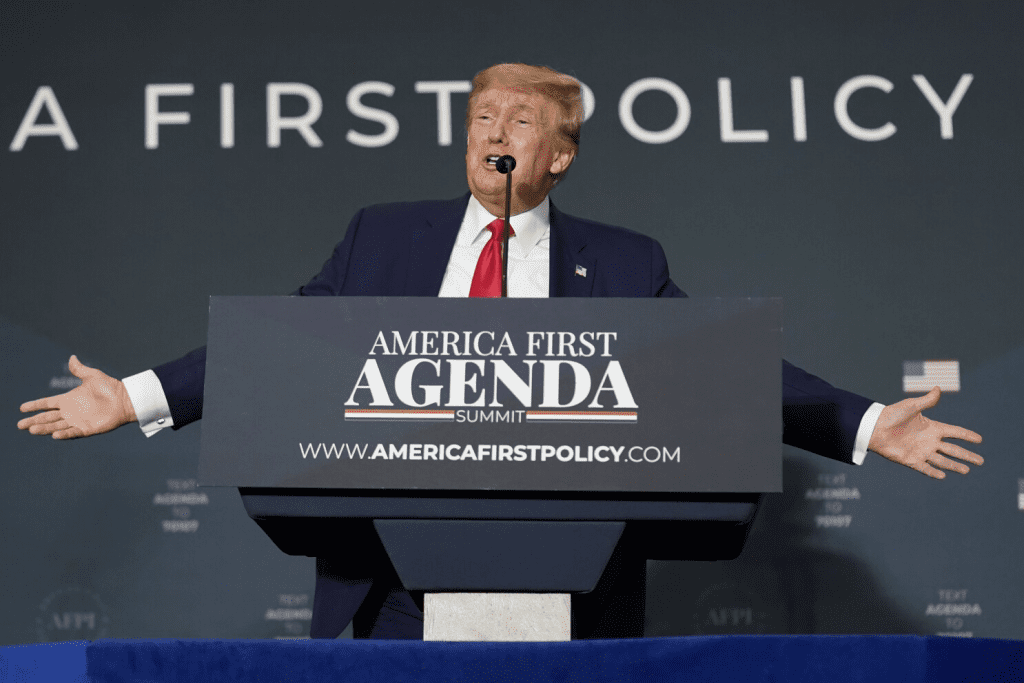
Washington, D.C., June 20, 2025—President Donald Trump’s recent declaration, “I’m not the president of the world. I’m the president of the United States. And from now on, it’s going to be America First,” delivered at a June 15 Ohio rally, has sharpened focus on his nationalist agenda. Following his 2024 landslide victory (312 electoral votes, 50.2% popular vote), the statement underscores his commitment to prioritizing U.S. interests over global concerns, from immigration to foreign policy. While supporters cheer the focus, critics warn it risks alienating allies and destabilizing global stability.
Trump’s remarks come amid aggressive domestic and international moves. His mass deportation program, detaining 150,000 undocumented immigrants and prompting 850,000 self-deportations since March, per DHS data, reflects an inward focus. The deployment of 700 Marines in Los Angeles to secure federal assets, coupled with 2,000 National Guard troops, has fueled protests, including the 4-6 million-strong “No Kings Day” marches on June 14. “America First means American jobs, American safety,” Trump said, citing a 5% wage hike in low-skill sectors, per Bureau of Labor Statistics. A Rasmussen Reports poll shows 59% of Americans support his immigration crackdown.
On the global stage, Trump’s stance signals a retreat from multilateralism. His support for Israel’s strikes on Iranian nuclear sites, following Iran’s 90% uranium enrichment, per IAEA reports, prioritizes U.S. and allied security over diplomacy. His withdrawal from the 2015 Iran deal and sanctions cutting Iran’s oil exports by 70%, per the Energy Information Administration, reflect a unilateral approach. Supporters argue this protects American interests, like preventing oil price spikes projected at 40% in a conflict, per a 2025 RAND study. A Pew Research poll finds 54% of Republicans back his Iran strategy.
Critics, however, see isolationism that could harm U.S. influence. Democrats like Senator Elizabeth Warren argue that abandoning global leadership strains ties with allies like NATO, already wary after Trump’s first-term threats to exit. The “America First” rhetoric, coupled with proposed 25% tariffs on imports, risks trade wars, with a potential $1.7 trillion GDP hit, per the American Immigration Council’s deportation estimates. The 4-6 million protesters, decrying policies affecting 5.1 million U.S. citizen children, per the Center for American Progress, view the stance as xenophobic. A Gallup poll shows 46% of Americans fear economic and diplomatic fallout.
Domestic unrest, including $50 million in Los Angeles riot damages and ten injured deputies, per LAPD data, underscores the policy’s divisiveness. California’s lawsuit against ICE tactics and 1,800 planned protests signal ongoing resistance. Trump’s team, eyeing the Insurrection Act, defends the focus as fulfilling voter mandates, with 52% of Americans supporting deportations, per Pew Research. Yet, critics like Governor Gavin Newsom warn that neglecting global cooperation could embolden adversaries like Iran, risking attacks on U.S. bases, per a 2025 Defense Department report.
Trump’s “America First” mantra, echoing his 2016 campaign, resonates with a base frustrated by globalization and open borders. His personal funding of a $25,000 White House flagpole, unveiled June 15, reinforces his patriotic image. But political scientist Rachel Blum cautions that prioritizing domestic gains over international stability may backfire, alienating moderates—42% of whom see his approach as divisive, per Gallup. As Trump navigates Iran, deportations, and protests, his pledge to put America first tests the balance between national pride and global responsibility.