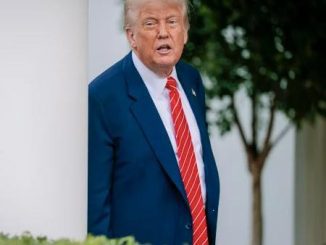
Washington, D.C., June 19, 2025—As Iran’s nuclear program advances, with uranium enriched to 90% purity, President Donald Trump’s bold approach—backing Israel’s strikes and deploying U.S. naval forces—has drawn misguided comparisons to the 2003 Iraq War. Supporters insist “Iran is not Iraq, and Trump is not Bush,” arguing that his calculated strategy and unpredictable style set him apart from George W. Bush’s costly invasion. Amid skepticism and domestic unrest, those underestimating Trump risk misjudging a leader whose track record defies conventional expectations.
Iran’s nuclear threat, confirmed by the International Atomic Energy Agency in May 2025, has heightened global tensions. Unlike Iraq, where no weapons of mass destruction were found, Iran’s documented violations of the 2015 nuclear deal and its support for attacks like the 1983 Beirut bombing (241 U.S. Marines killed) fuel urgency. Trump’s sanctions, cutting Iran’s oil exports by 70% from 2018-2020 per the Energy Information Administration, and his 2020 strike on Qassem Soleimani show a preference for targeted action over prolonged war. A Rasmussen Reports poll finds 54% of Americans support military measures to stop Iran’s nuclear ambitions.
Critics, wary of Iraq’s $2 trillion cost and 4,500 U.S. lives lost per Pentagon data, fear Trump’s rhetoric—calling Iran “a terrorist regime” at a June 15 Ohio rally—could spark another quagmire. Democrats like Senator Bernie Sanders warn that strikes on fortified sites like Fordow, backed by Russian S-400 defenses, risk escalation, with a 2025 RAND report projecting 40% oil price spikes. The “No Kings Day” protests, drawing 4-6 million on June 14, reflect fears of militarism, amplified by Trump’s domestic use of 700 Marines in Los Angeles. A Pew Research poll shows 38% favor U.S. involvement against Iran.
Supporters argue Trump’s unpredictability gives him an edge Bush lacked. His Abraham Accords, normalizing Israel’s ties with four Arab states, and withdrawal from the Iran deal demonstrate strategic flexibility. “Trump plays chess, not checkers,” said a Florida rallygoer, citing his 2024 landslide (312 electoral votes, 50.2% popular vote) as proof of public trust. Senator John Fetterman’s call for U.S. support of Israeli strikes aligns with Trump’s stance, suggesting bipartisan concern. A 2025 Defense Department assessment notes Iran’s proxies, like Hezbollah, are deterred by Trump’s proven willingness to act.
Skeptics overlook key differences. Bush’s Iraq invasion relied on flawed intelligence and a massive ground force; Trump favors precision strikes, cyberwarfare, and economic pressure. Iran’s Strait of Hormuz control, handling 20% of global oil per EIA data, makes it a graver economic threat than Iraq, justifying preemption to protect U.S. consumers, where gas prices hit $3.85 per gallon, per AAA. Political scientist David Faris argues, “Trump’s not repeating Iraq—he’s rewriting the playbook.” Yet, 46% of Americans in a Gallup poll prioritize domestic issues like deportations over foreign conflicts.
The underestimation of Trump persists amid domestic distractions. His deportation of 150,000 undocumented immigrants, with 850,000 self-deporting, and Los Angeles riots injuring ten deputies dominate headlines. Legal challenges, like California’s suit against ICE, and 1,800 planned protests add pressure. As Israel readies for potential unilateral action, Trump’s supporters warn doubters: his Iran strategy, rooted in economic strangulation and selective force, is no Bush rerun. Misjudging him could embolden Tehran, risking a nuclear crisis with global fallout.