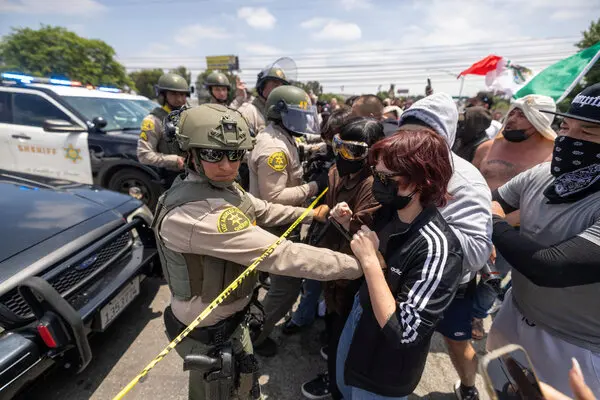
The chaotic scenes unfolding in Los Angeles in June 2025, where anti-ICE protests met with tear gas and 2,000 National Guard troops, have galvanized some Americans to demand an even more aggressive deportation campaign. Sparked by President Donald Trump’s record-breaking immigration enforcement—142,000 deportations and 2,200 arrests in a single day—the unrest, marked by Mexican flags and clashes with federal agents, has intensified calls for a harder line. As Trump’s second term pushes its “America First” agenda, the push for more deportations reflects deep divisions over security, identity, and the human cost of mass removals.
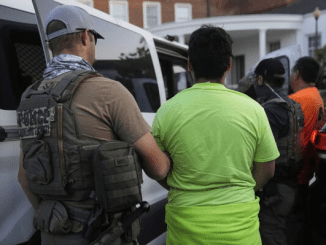
The Los Angeles protests erupted after ICE raids targeted workplaces like garment factories and Home Depot stores, detaining at least 70-80 migrants, per the Coalition for Humane Immigrant Rights. Demonstrators blocked roads, chanted “Set them free,” and faced a militarized response, with some arrested for allegedly assaulting agents. Supporters of escalation, backed by 90% of 2016 Trump voters per a 2025 Gallup poll, see the unrest as justification for tougher measures. Policies like the Safeguard American Voter Eligibility Act and Wyoming’s proof-of-citizenship voting law resonate with 62% of Americans favoring stricter enforcement, per a 2024 Pew survey. The administration’s “Operation At Large,” using 5,000 federal agents, aims for 3,000 daily arrests, a pace projecting 3.2 million over four years.
Critics warn that intensifying deportations risks catastrophic consequences. The ACLU reports 35 wrongful detentions of U.S. citizens in 2025, highlighting enforcement errors. Deporting all 11 million undocumented immigrants could cost $315 billion and take 20 years, per a 2024 American Immigration Council study, disrupting industries like construction, where 34% of workers are undocumented, per a 2022 Kaiser study. Los Angeles Mayor Karen Bass called the raids “terrorizing,” noting undocumented workers contribute $79.7 billion annually, per a 2024 Center for American Progress study. Protests reflect desperation, not defiance, with 55% of Americans in a 2025 Pew poll viewing Trump’s policies as excessive.
The call for more deportations ties to broader cultural battles. Trump’s rhetoric, including treason charges against Biden aides and pardons for 1,500, including Capitol rioters, amplifies perceptions of unrest as disloyalty. The New York courtroom clash, where protesters allegedly assaulted ICE agents, and the Indiana teacher’s “8647” shirt incident underscore the charged climate. Yet, weak history education—only 13% of eighth graders proficient per a 2023 NAEP report—obscures lessons from 1954’s Operation Wetback, which caused widespread hardship.
Economic and legal challenges complicate the push. Tariffs, raising household costs by $1,300 annually per a 2025 Brookings study, strain public support, while lawsuits against protester arrests and visa revocations for suspected Hamas sympathizers signal resistance. The deployment of National Guard troops, bypassing Gov. Gavin Newsom’s objections, evokes Trump’s 2020 call to shoot protesters, raising authoritarianism fears.
As the 2026 midterms loom, the demand for more deportations energizes Trump’s base but risks alienating moderates, with 19% of 2020 Trump voters undecided, per a 2025 CNN poll. The Los Angeles chaos—flags waving, agents clashing—embodies a nation wrestling with its identity. The call for escalation tests America’s balance between enforcing borders and preserving humanity, with no resolution in sight.