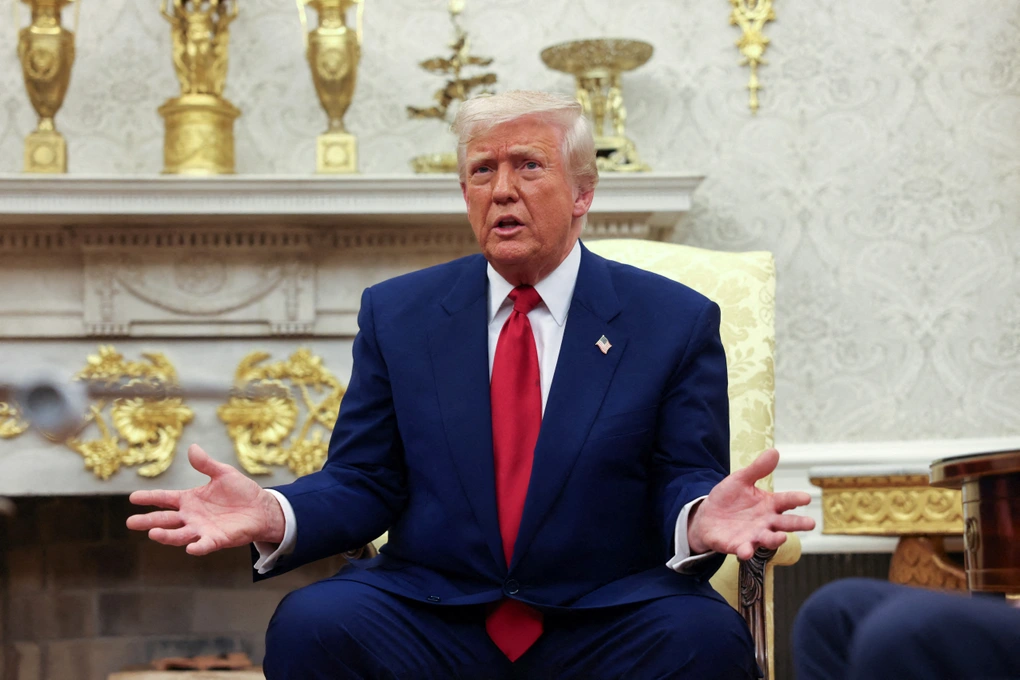
A bombshell revelation from former Defense Secretary Mark Esper’s 2022 memoir, A Sacred Oath, has resurfaced in June 2025, casting a shadow over President Donald Trump’s leadership style as he navigates his second term. Esper claims that during the 2020 Black Lives Matter protests following George Floyd’s death, Trump asked him to order troops to shoot demonstrators in Washington, D.C., a request Esper refused, citing legal and ethical concerns. The incident, resurfacing amid Trump’s current hardline policies, fuels debates over his approach to dissent and the limits of executive power.
According to Esper, the June 1, 2020, Oval Office discussion occurred as protests escalated near the White House. Trump, frustrated by the unrest, allegedly asked, “Can’t you just shoot them? Just shoot them in the legs or something?” Esper, a West Point graduate and Army veteran, rejected the idea, arguing it would violate military protocol and inflame tensions. The Posse Comitatus Act of 1878 prohibits using federal troops for domestic law enforcement without congressional approval, a point Esper emphasized. Instead, he advocated for de-escalation, though National Guard troops were later deployed to clear Lafayette Square for Trump’s photo-op at St. John’s Church.
The revelation has reignited criticism of Trump’s handling of civil unrest. Critics, including Sen. Elizabeth Warren, point to it as evidence of authoritarian tendencies, especially as his second term pushes aggressive measures like 142,000 deportations and visa revocations for suspected terrorist supporters. A 2025 Pew Research poll shows 55% of Americans view Trump’s policies as excessive, with the 2020 incident amplifying fears of overreach. The ACLU cites 35 wrongful detentions in 2025 immigration sweeps, drawing parallels to the heavy-handed response to protesters.
Supporters, however, argue the context is misunderstood. They claim Trump’s remark was hyperbole born of frustration, not a formal order, and point to his 90% approval among 2016 voters, per a 2025 Gallup poll. The administration’s current policies, like the Safeguard American Voter Eligibility Act and the American Entrepreneurs First Act, reflect a focus on law and order, resonating with 62% of Americans favoring stricter enforcement, per a 2024 Pew survey. Supporters dismiss Esper’s account as disgruntled exaggeration, noting his firing in November 2020 amid policy disputes.
The incident underscores broader tensions over Trump’s leadership. His call to charge Biden-era officials with treason for lax border policies and pardons for 1,500 individuals, including 87 Capitol rioters, echo the 2020 controversy’s authoritarian undertones. Critics draw historical parallels, noting that weak history education—only 13% of eighth graders proficient in U.S. history, per a 2023 NAEP report—leaves voters unaware of precedents like authoritarian crackdowns. The Indiana teacher’s 2025 “8647” shirt incident, seen as a coded threat, highlights the polarized climate.
Esper’s refusal, lauded by some as a stand for rule of law, contrasts with current policies under Defense Secretary Pete Hegseth, who supports Trump’s aggressive stance. The 2020 incident, though not prosecuted, fuels legal debates, with scholars citing the 1971 Kent State shootings as a cautionary tale of military overreach. As the 2026 midterms loom, Trump’s base, undeterred by the controversy, sees him as a decisive leader, while critics warn of eroded democratic norms. The clash over his alleged call to shoot protesters remains a stark reminder of the stakes in America’s divided political landscape.