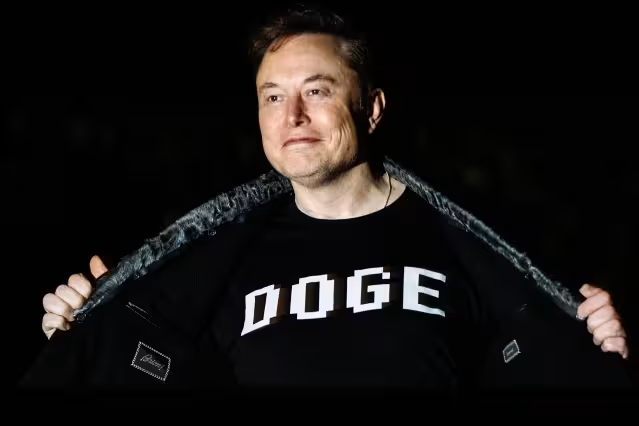
A scathing critique of the Department of Government Efficiency (DOGE), posted on May 30, 2025, has amplified concerns about its four-month tenure under Elon Musk, alleging it “shattered” lives, fueled global disease, starvation, and death, and failed to dent federal debt or spending. The claims, echoing broader discontent, paint DOGE’s aggressive cuts as a humanitarian disaster with no fiscal payoff. As Musk exits, the debate over DOGE’s impact—catastrophic or overstated—intensifies, raising questions about accountability and the cost of rapid reform.
DOGE, launched by President Donald Trump on January 20, 2025, aimed to slash $2 trillion in federal spending. Musk claimed $500 billion in savings, including $3.4 billion in canceled diversity contracts and $40 billion in terminated grants, per doge.gov. Notable cuts included $580 million in wasteful Department of Labor contracts, like $10 million for “gender equity in Mexico,” and USAID’s near-total dismantling, ending 80% of its grants, per The New York Times. Supporters, citing Trump’s 52% “right track” Rasmussen poll, argue these moves curbed bureaucratic waste, aligning with his mandate.
Critics, however, decry catastrophic consequences. The USAID cuts, impacting 2,000 global programs, are linked to 300,000 deaths, mostly children, due to disrupted health and food aid, per Boston University’s Brooke Nichols. The New York Times reported suffering in East Africa, with Secretary of State Marco Rubio denying fatal outcomes at a House hearing. Domestically, DOGE’s firing of 260,000 federal workers caused Social Security and veterans’ service delays, with 24,000 rehired after court rulings, costing $135 billion in lost productivity, per the Partnership for Public Service. A 2025 Pew poll shows 57% of Americans disapprove of DOGE’s approach.
The claim of “zero impact” on debt and spending is contentious. Federal spending rose $166 billion in 2025 over 2024, driven by Social Security, Medicare, and defense, per The Washington Post. DOGE’s $500 billion in claimed savings—disputed by NPR for inflated figures like a triple-counted $655 million USAID cut—pales against a $1.1 trillion deficit through May, per the Committee for a Responsible Federal Budget. Experts like Jessica Riedl argue DOGE ignored mandatory spending, which drives 75% of the budget, rendering its cuts marginal, per reason.com.
Allegations of increased disease and starvation stem from USAID’s collapse, which slashed vaccine and nutrition programs. Critics argue this weakened global health resilience, though no direct data ties DOGE to domestic disease spikes. The “shattered lives” narrative points to deported U.S. citizen toddler Manu Borges Santos and economic disruption from 1,600 small business contract cancellations, per The Guardian. Yet, Trump’s team, via Karoline Leavitt, insists DOGE exposed fraud, like $630 million in SBA loans, despite courts rebuking unproven claims, per TIME.
Musk’s departure, after clashing with Trump over a $4 trillion tax bill, leaves DOGE’s future uncertain. Supporters see a foundation for efficiency; critics demand probes into its $38 billion in legal challenges. The truth—humanitarian crisis or ideological overreach—awaits scrutiny, but DOGE’s brief reign has left a fractured legacy.