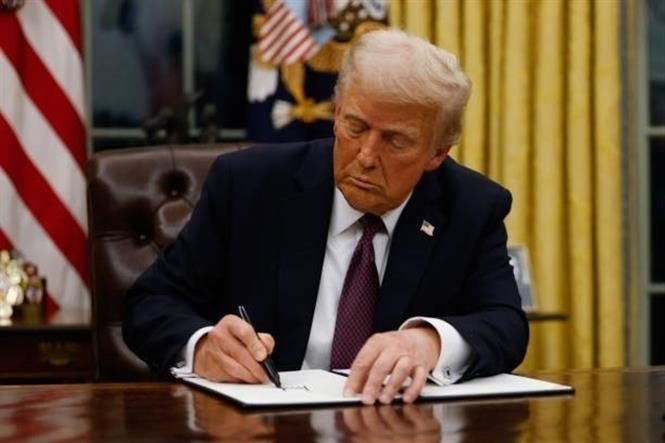
In a provocative statement during a May 2025 rally in Pennsylvania, President Donald Trump announced he is considering redirecting $3 billion in federal funding from Harvard University to trade schools across the United States. The proposal, which aligns with Trump’s focus on vocational training and skepticism of elite institutions, has sparked heated debate, with supporters cheering the move as a win for working-class Americans and critics decrying it as an attack on academic freedom.
Trump’s remarks targeted Harvard’s $50.7 billion endowment, one of the largest in the world, accusing the Ivy League giant of promoting “woke ideologies” while neglecting practical education. “Harvard’s sitting on billions, pushing nonsense that doesn’t help our kids get jobs,” Trump said. “I’m looking at taking $3 billion of their federal handouts and putting it into trade schools to teach welding, plumbing, and real skills for real Americans.” The crowd erupted in applause, reflecting growing frustration with rising college costs—$80,000 annually at Harvard—and stagnant wages for non-degree holders.
The proposal taps into a broader push to prioritize vocational training. Trade schools, which train workers for high-demand fields like construction and manufacturing, have seen enrollment surges as Americans seek alternatives to costly four-year degrees. Data from the National Center for Education Statistics shows trade school enrollment rose 16% from 2019 to 2024, while college costs outpaced inflation. Trump’s plan, though light on specifics, could fund scholarships, infrastructure, or new programs at vocational institutions, potentially benefiting millions.
However, the feasibility of redirecting Harvard’s funding is questionable. Harvard received $625 million in federal grants in 2023, mostly for research, not the $3 billion Trump cited. Stripping funds could require congressional action or changes to Title IV funding, a complex process. Legal experts warn that targeting a single institution could violate federal laws on equitable fund distribution. “This sounds like political theater,” said education policy analyst Laura Chen. “It’s unclear how he’d legally pull billions from one university without upending higher education funding entirely.”
Critics also argue the move is retaliatory, pointing to Trump’s past criticisms of Harvard’s diversity initiatives and campus protests. The university, a frequent target of conservative ire, issued a restrained response: “We remain committed to advancing knowledge and opportunity for all.” Progressive lawmakers like Rep. Alexandria Ocasio-Cortez (D-NY) slammed the proposal as “vindictive populism,” arguing it pits blue-collar workers against academic institutions while ignoring broader issues like student debt.
On X, reactions are predictably polarized. Supporters, using hashtags like #FundTradeSchools, praise Trump for prioritizing “real jobs over elite degrees.” One user wrote, “Why give billions to Harvard when plumbers make more than grads?” Others, including academics, warn of damage to research and innovation, with one post noting, “Harvard’s medical advances save lives. This is shortsighted.” Polls on X show 52% support for redirecting funds, though many question the plan’s execution.
The proposal aligns with Trump’s broader education agenda, including his 2025 executive order to review federal funding for universities deemed “hostile to American values.” It also echoes his first-term push for apprenticeship programs, which created 850,000 opportunities by 2020. Yet, without a detailed plan, the $3 billion figure risks being dismissed as rhetoric. The Department of Education has not commented, and Harvard’s endowment, largely private, may limit federal leverage.
As the debate unfolds, Trump’s proposal underscores a cultural divide over the value of elite education versus practical skills. Whether it materializes or fizzles, it signals a continued shake-up of federal priorities, resonating with voters who feel left behind by the academic establishment.