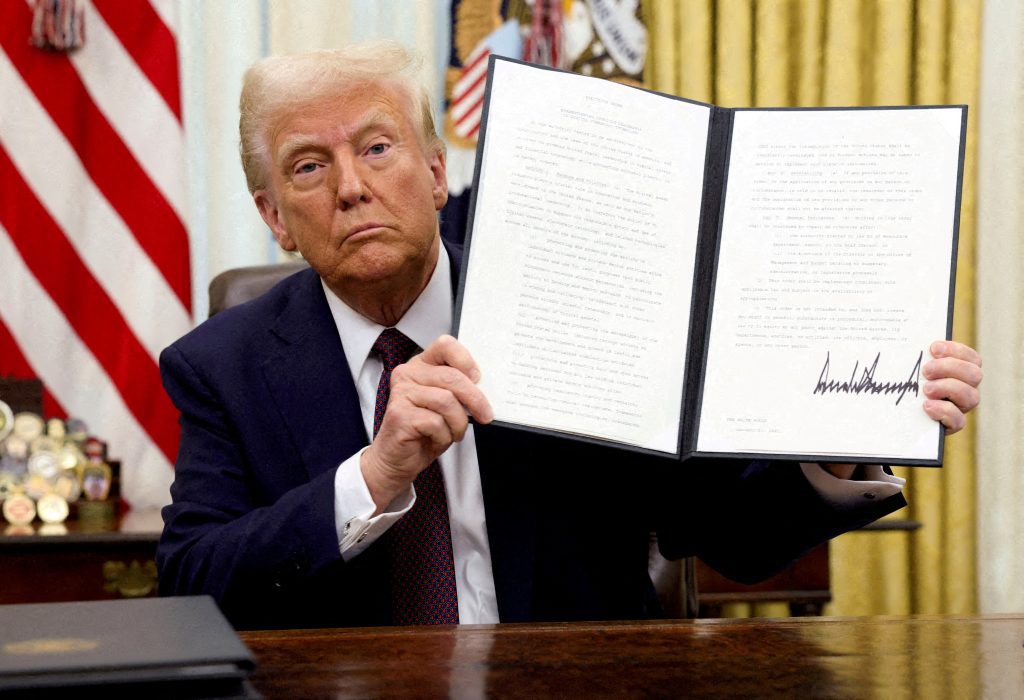
Washington, D.C. – President Donald Trump’s exclusive May 22, 2025, gala dinner for top holders of his $TRUMP memecoin has drawn sharp criticism as reports reveal that most attendees are likely foreign nationals, including Chinese crypto billionaire Justin Sun. The event, held at Trump National Golf Club in Virginia, has fueled accusations of corruption, with critics pointing to the Securities and Exchange Commission’s (SEC) recent decision to pause fraud charges against Sun as evidence of a “pay-to-play” scheme. Democratic lawmakers and ethics watchdogs warn that the dinner, tied to Trump’s cryptocurrency ventures, risks undermining U.S. governance.
The $TRUMP memecoin, launched in January 2025, surged 50% in value after Trump announced that the top 220 holders would dine with him, with the top 25 gaining a VIP reception and White House tour. A CNBC analysis found that 18 of the top 25 holders used foreign exchanges like Binance, which bans U.S. users, suggesting they are non-Americans. Sun, holding over $18 million in $TRUMP tokens via the Seychelles-based HTX exchange, tops the leaderboard. His $75 million investment in Trump’s World Liberty Financial (WLF) project, which earned Trump over $50 million, has raised eyebrows, especially after the SEC halted its 2023 fraud case against Sun in February.
Sun, a controversial figure known for buying a $6.2 million banana artwork, was accused of unregistered securities sales and market manipulation through his Tron platform. The SEC’s pause, citing “public interest,” coincided with Sun’s WLF investment, prompting allegations of favoritism. “This is corruption, plain and simple,” tweeted former Labor Secretary Robert Reich, echoing Sen. Chris Murphy’s claim that the memecoin is “the most brazenly corrupt act” by a president. Democratic Sens. Adam Schiff and Elizabeth Warren have called for an ethics probe, citing risks of foreign influence.
Trump’s team defends the dinner as a legitimate crypto promotion, with the Trump Organization and affiliate Fight Fight Fight LLC controlling 80% of $TRUMP’s supply. The coin’s website touts it as “the most exclusive event in the world,” but critics argue it’s a vehicle for enriching Trump’s family, who earn 75% of WLF revenues. Accountable.US called it “the most nakedly corrupt self-enrichment scheme in U.S. presidential history.” Other attendees include Singapore’s MemeCore and Australian investor Kain Warwick, though most identities remain obscured by pseudonymous wallets.
The event has alarmed even some Republicans. Sen. Cynthia Lummis, a crypto advocate, expressed unease, urging regulatory clarity. Ethics experts warn that the pseudonymous nature of crypto allows foreign actors to buy access anonymously, bypassing Federal Election Commission limits. Trump’s broader crypto push, including pausing corporate bribery probes and disbanding the Justice Department’s crypto task force, has critics like Anthony Scaramucci decrying a system where “favors are on sale.”
As the dinner approaches, the $TRUMP coin’s volatility—peaking at $75 and now at $12—has led to $3.9 billion in investor losses, per The New Republic. With Trump’s SEC appointee, Paul Atkins, favoring deregulation, the administration’s crypto stance raises questions about accountability. The dinner, a symbol of Trump’s pivot to digital assets, underscores a contentious blend of politics and profit.