Yesterday, Speaker of the House Mike Johnson defended President Trump against charges of wrongdoing by arguing that it was fine, because he was doing it all out in the open.
The reason that many people refer to the Bidens as the ‘Biden crime family’ is because they were doing all this stuff behind curtains, in the back rooms. They were trying to conceal it. . . Whatever President Trump is doing is out in the open. They’re not trying to conceal anything. . . . President Trump has had nothing to hide. He’s very up front about it.
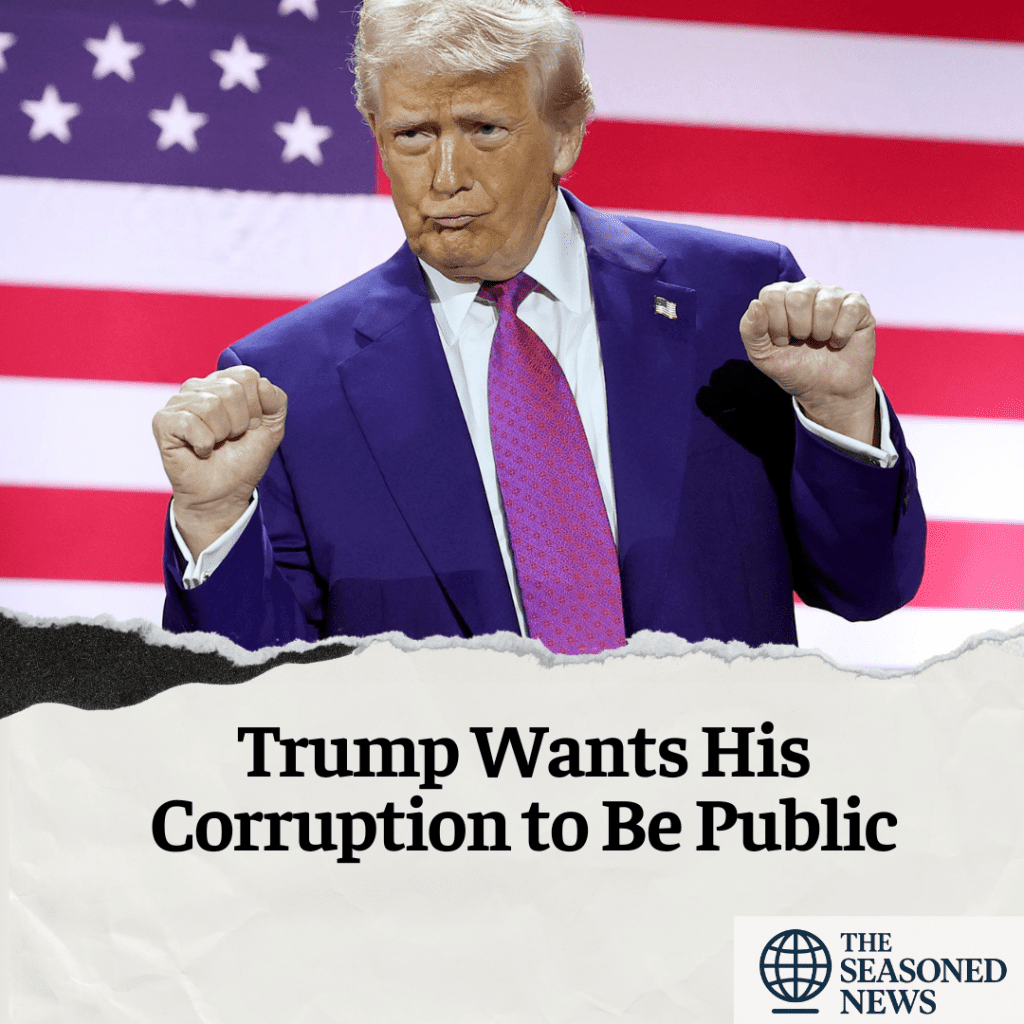
This defense is an admission. Johnson is correct that Donald Trump’s open corruption and lawlessness is fundamentally different from run-of-the-mill corruption and furtive law-breaking. The difference is that it is far more dangerous.
After all, if you live in a nation where you expect laws and rules are mostly going to be enforced, you’ll do your unlawful things in private. And you’ll cover up what you’ve done. You’ll behave like Richard Nixon.
But if you’re bolder than Nixon, if you think you can get away with more than Nixon did or more than Nixon even wanted to do, then you’re not going to bother with a little surreptitious law-breaking and a subsequent cover-up. You’ll test the limits of impunity.
Nixon was a dodgy character operating within a rule-of-law setting. That’s why Nixon was “Tricky Dick.” Trump’s not a particularly tricky politician. He’s much more like a crime boss. And he understands that you’re more powerful the more your criminality can afford to be demonstrated to others.
After all, a mob boss needs shopkeepers to see that they need to pay him protection money. A gangster needs it to be known that if you cross him, you’ll pay a price.
So if such a politician wants not just a bribe or two but a cascade of bribes, he has to let people know that he welcomes bribes, and that everyone is expected to offer bribes. Everyone also has to understand that they can get away with the bribes and benefit from them, and conversely that they’ll pay a price if they don’t step up.
And if you’re not just a mob boss but also the leader of an authoritarian movement, corruption is just part of the story. If you’re interested in autocracy and not just kleptocracy, if you’d like to replace the rule of law with your own personal rule and also to liberate your followers from the rule of law, then your ambitions are even greater.
An authoritarian project has to come out of the shadows to really succeed. The ultimate intimidation of many depends on some early and well-publicized assaults against a few. The harassment of individuals at the border, the assault on some universities and law firms, the targeting of some opposition figures—all of these acts need to be public and publicized to have the desired effect.
So the authoritarian wants people to understand that the Department of Justice is not operating under traditional norms and constraints, that it’s now more a department of political favors and retribution than one of justice and law. The authoritarian wants opponents and friends to know that political adversaries have been targeted.
His lawyers can’t say that in court, so an authoritarian has to straddle two worlds for a period of time. They use the legal system on the way to subverting it. The necessity of deception for at least a while is in tension with the desirability of publicity, and so clever sophistry is their halfway house on the way to brazen openness.
But in any case losing a few court cases to courts operating under the old rules is a small price to pay for progress in subverting those rules. Authoritarians want people to see their authoritarianism in action. Yesterday two members of Trump’s Cabinet, Kristi Noem and Roberty F. Kennedy Jr., testified before Congress. They didn’t even pretend to try to be responsive or respectful or to answer questions. Some of the commentary focused on the “failure” of their testimony. But was it a failure if it normalized the idea that executive branch officials feel no obligation to even pretend being accountable to Congress?
Or consider the tariffs. Do you want to bring home to American businesses and also demonstrate to foreign leaders how much their well-being depends on courting you? Then you want to make them understand that no rule or agreement is permanent, that you—and only you—need to be placated; that they always need to hesitate before crossing you.
We’re not yet all the way to authoritarianism. So when the system has been strong enough to push back, Trump and his apparatchiks fall back on all the usual dodges. Trump’s lawyers will argue in court that the president isn’t violating the Constitution. But the point ultimately is to undermine the Constitution. Trump’s lawyers pretend in court that the administration is not violating habeas corpus. But the point is ultimately to suspend habeas corpus.
“Hypocrisy is the tribute that vice pays to virtue,” François de La Rochefoucauld famously remarked. But at some point the authoritarian no longer wants to pay that tribute. He wants the very thought of virtue to be laughable, the notion of the rule of law to seem ridiculous. His authoritarianism seeks to rule in daylight.
And people like Mike Johnson call it a virtue.