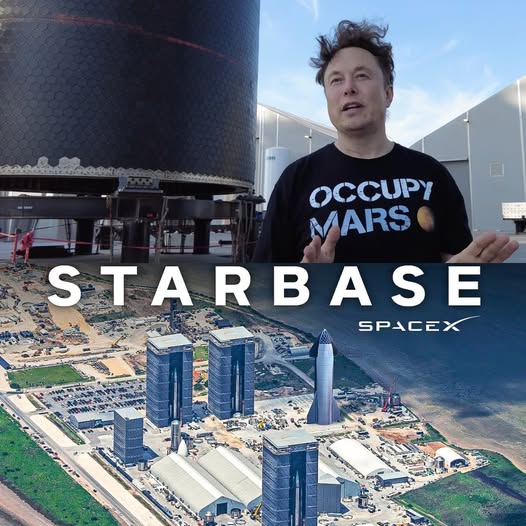
Starbase, TX – On May 14, 2025, SpaceX employees in Starbase, Texas, began voting on a charter proposal that could transform the newly incorporated city into the first fully privatized municipality in the United States. The proposal, spearheaded by Elon Musk, aims to establish Starbase as a self-sustaining, corporate-run enclave governed exclusively by a board elected from within SpaceX. While Musk touts the plan as a “testbed for sustainable governance,” local lawmakers and critics warn it risks creating a corporate autocracy, raising concerns about transparency and democratic accountability.
Starbase, a 1.5-square-mile community near Boca Chica Beach, became an official city on May 3, 2025, after a landslide vote by its 283 eligible voters—mostly SpaceX employees and their families. Now, just days later, the same group is deciding on a charter that would grant unprecedented autonomy to SpaceX. The proposed governance model would exclude external oversight, with the city’s board handling everything from zoning to public services. Plans include a solar grid for energy, Tesla vehicles for public transport, and AI-driven policing powered by Musk’s xAI, according to statements Musk made on X.
Musk, who celebrated Starbase’s incorporation with a post on X saying, “Starbase, Texas is now a real city!” sees this as a step toward his vision of a Mars colony. He has argued that a privatized city allows for rapid innovation, free from bureaucratic red tape, stating on May 12, “Starbase will show the world how to govern sustainably—on Earth and beyond.” The city, already home to 500 residents, including 260 SpaceX employees, is a hub for the Starship program, which aims to send humans to Mars. SpaceX’s dominance is evident: the mayor, Bobby Peden, and commissioners Jenna Petrzelka and Jordan Buss are all current or former SpaceX employees, elected unopposed on May 3.
The charter proposal, however, has sparked alarm. Texas Rep. Gene Wu (D-Houston) warned on May 13 that Starbase could become “a corporate autocracy where SpaceX holds all the cards.” Critics fear the lack of external governance could erode democratic principles, especially since the voting population is almost entirely tied to SpaceX. The South Texas Environmental Justice Network, which protested Starbase’s incorporation over concerns about public beach access, called the charter “a dangerous precedent,” arguing it prioritizes corporate control over community rights. A proposed bill to shift beach closure authority to Starbase failed last month, but fears persist that a privatized city could further limit access to Boca Chica Beach, a public space cherished by locals.
Economically, Starbase’s plans are ambitious. The solar grid aims to make the city energy-independent, while Tesla transport and AI policing promise efficiency. Yet, these innovations come with risks. AI policing, for instance, raises privacy concerns, and the city’s reliance on Musk’s companies—SpaceX, Tesla, and xAI—creates a monopoly-like structure. Cameron County Judge Eddie Trevino Jr., who opposed the beach closure bill, told NBC News on May 4, “If it’s not broken, it doesn’t need to be fixed,” reflecting broader skepticism about Starbase’s governance experiments.
The vote, expected to conclude by May 16, is likely to pass, given the demographic makeup of Starbase’s electorate. However, its implications extend far beyond Texas. If successful, Starbase could inspire similar corporate-run cities, challenging traditional governance models. But without checks and balances, the risk of unaccountable power looms large, especially given Musk’s controversial role in the Trump administration, where his leadership of the Department of Government Efficiency has drawn criticism for federal job cuts.
Starbase’s transformation into a privatized city marks a bold experiment in Musk’s vision for the future. Yet, as SpaceX employees cast their votes, the line between innovation and overreach remains perilously thin, leaving many to wonder if this “testbed” will truly serve the public—or just the ambitions of one man.