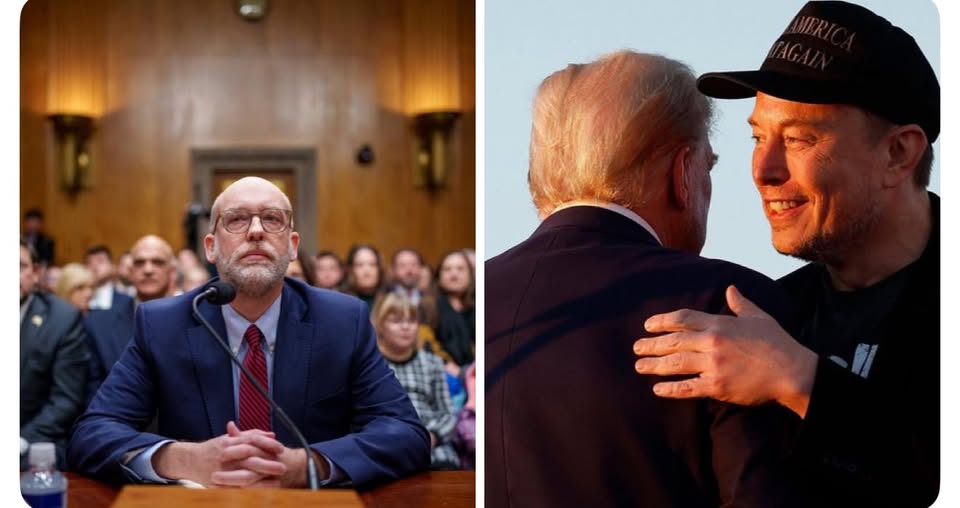
Washington, D.C., May 13, 2025 — Russell Vought, the current director of the Office of Management and Budget (OMB) and a key architect of the controversial Project 2025, is set to replace Elon Musk as head of the Department of Government Efficiency (DOGE), according to a report by The Wall Street Journal on May 12. The transition marks a significant shift for DOGE, which has been at the forefront of the Trump administration’s aggressive cost-cutting and deregulation efforts since its inception in January 2025.
Musk, who has led DOGE alongside Vivek Ramaswamy, announced his departure later this month after overseeing a tumultuous period of federal layoffs, agency shutdowns, and budget slashes that sparked mass protests. His tenure was marked by high-profile actions, such as the dismantling of the Consumer Financial Protection Bureau (CFPB), where DOGE officials deleted the agency’s X account and Vought assumed the role of acting director. Musk’s exit, while anticipated by some due to his business commitments with Tesla and SpaceX, paves the way for Vought to cement his influence over the administration’s efficiency agenda.
Vought, a self-described Christian nationalist and staunch fiscal conservative, has been a polarizing figure since his Senate confirmation as OMB director in February 2025. His appointment to lead DOGE aligns with his long-standing vision of shrinking the federal government, a goal he pursued during Trump’s first term and detailed in Project 2025—a conservative blueprint that advocates for dismantling agencies, slashing social programs, and enhancing presidential power. Vought’s plans include reviving Schedule F, an executive order that strips job protections from federal workers, and pushing for a $9.3 billion rescissions package targeting agencies like USAID and NPR, which he views as bloated or ideologically misaligned.
The transition has drawn mixed reactions. Supporters on X celebrated Vought’s appointment, with some calling it a “MAGA win” and praising his potential to uncover fraud, building on DOGE’s claim of removing 9.9 million “scammers” from Social Security records—a figure experts have contested as exaggerated. Others, however, fear Vought’s leadership will intensify DOGE’s most controversial actions. His history of advocating for “traumatizing” federal workers, as reported by ProPublica in October 2024, and his willingness to challenge congressional spending laws, such as the Impoundment Control Act, have alarmed Democrats and some Republicans alike.
Critics point to Vought’s role in past controversies, like the 2019 Ukraine aid delay that contributed to Trump’s first impeachment, as evidence of his disregard for constitutional norms. Senator Roger Wicker (R-MS) recently accused Vought of “doing silly math” in budget proposals, reflecting unease even among GOP ranks. Democrats, meanwhile, have labeled him a dangerous ideologue, with Senate Minority Leader Chuck Schumer warning in February that Vought’s control over federal funds threatens democratic checks and balances.
Vought’s alliance with Musk has been a force multiplier, with Musk providing public pressure while Vought leverages OMB’s technical expertise to execute cuts. Their collaboration in dismantling the CFPB—where Vought navigated legal challenges after Musk’s initial incursion—offers a glimpse of what’s to come. Yet, Vought’s more ideological approach, rooted in his belief in “radical constitutionalism” and a “nation under God,” may shift DOGE’s focus toward cultural battles, such as restricting immigration and defunding “woke” programs, as outlined in his Project 2025 writings.
As Vought prepares to lead DOGE, the stakes are high. His plans to reclassify federal employees and advance deregulation could reshape the government for decades, but they risk further alienating a workforce already reeling from layoffs and sparking legal challenges that may test the limits of executive power. For now, Vought’s rise signals a new chapter for DOGE—one that promises to double down on Trump’s vision, for better or worse.