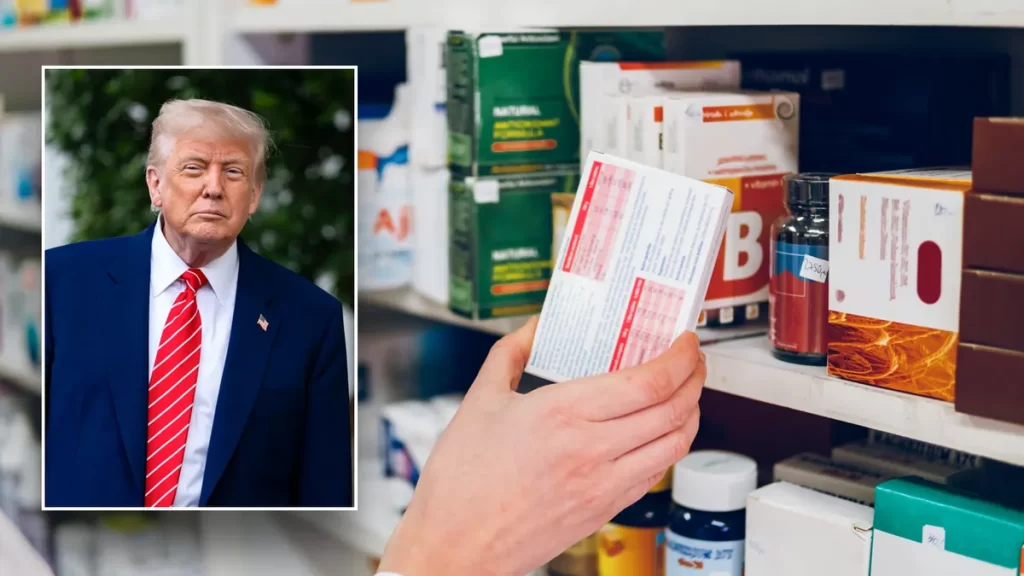
Washington, D.C., May 12, 2025 — President Donald Trump announced on Sunday evening that he will sign a landmark executive order on Monday morning, May 12, at 9:00 A.M. in the White House, aimed at reducing prescription drug prices in the United States by 30% to 80%. Describing it as “one of the most consequential executive orders in our country’s history,” Trump revealed on Truth Social that the policy will implement a “Most Favored Nation” (MFN) pricing model, ensuring the U.S. pays the lowest price for medications among high-income countries globally.
The announcement comes as Americans continue to grapple with prescription drug costs that are often two to ten times higher than in other developed nations, according to the Rand Corporation. Trump emphasized the disparity, stating, “For many years the world has wondered why prescription drugs in the United States were so much higher in price than in any other nation, sometimes being five to ten times more expensive than the same drug, manufactured in the same laboratory.” He argued that pharmaceutical companies have long justified these prices with research and development costs, a claim he dismissed as an excuse that unfairly burdens American patients.
Under the MFN policy, the U.S. will align its drug prices with the lowest rates paid by other wealthy nations, a strategy Trump unsuccessfully pursued during his first term when a similar proposal was blocked by a federal court following lawsuits from the pharmaceutical industry. The White House has not yet clarified which programs—such as Medicare or Medicaid—will be directly affected, but the order is expected to apply broadly, potentially impacting a wide range of drugs beyond those currently negotiated under Biden’s Inflation Reduction Act. Trump claimed the move will save “trillions of dollars” and bring “fairness to America,” though he acknowledged that global drug prices may rise as a result.
The pharmaceutical industry has reacted with alarm. The Pharmaceutical Research and Manufacturers of America (PhRMA) labeled the MFN model as “government price-setting” that could harm patients by limiting access to medications. Critics like analyst Chris Meekins of Raymond James warned that the more ambitious Trump’s claims, the more likely the order will face legal challenges, as occurred in 2020 when a federal judge halted a similar initiative projected to save $85 billion over seven years. Anti-Trump voices on X, such as Ed Krassenstein, have called the 30%-80% reduction a “lie,” arguing that executive orders cannot force private manufacturers to cut list prices without congressional action, and that the savings may not extend beyond federal programs.
On the other hand, Trump’s supporters on X have celebrated the move, with users like
@TaylorSharp1776 calling it a “MAGA win” that will save Americans trillions. The announcement aligns with Trump’s broader health care agenda, which has included a previous executive order in April 2025 to enhance Medicare drug price negotiations and promote generics, though that order’s impact has been limited by the need for congressional collaboration. The timing of this latest order coincides with Trump’s upcoming Middle East trip, including a stop in Qatar, raising questions about potential trade-offs amid his acceptance of a $400 million plane from the Qatari government—a deal already under scrutiny as a possible bribe.
While the promise of immediate price cuts has sparked hope for many Americans struggling with high drug costs, the lack of detailed implementation plans and the history of legal pushback cast doubt on the order’s immediate impact. If successful, the policy could reshape the pharmaceutical market, but it also risks exacerbating drug shortages if global prices rise as Trump predicts. As the clock ticks toward the signing, all eyes are on whether this executive order will deliver on its bold promises—or become another chapter in Trump’s contentious history with drug pricing reform.