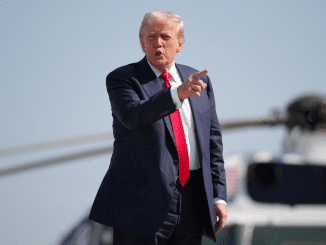
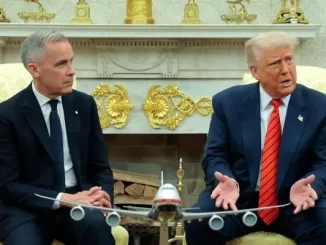
On May 5, 2025, President Donald J. Trump announced his decision to once again forgo his $400,000 annual presidential salary during his second term, a move that has ignited a complex conversation across the political spectrum. As a Democrat committed to public service and the values of transparency, equity, and accountability, I recognize that this action—while symbolic—raises important questions about leadership, sacrifice, and the broader priorities of our nation. President Trump’s decision to donate his salary, as he did during his first term, underscores a commitment to a vision of leadership that he frames as putting “America First.” However, as we reflect on this gesture, we must also consider its implications, context, and alignment with the pressing needs of the American people. This article explores the significance of this decision, its historical precedent, and the broader call for leadership that serves all Americans.
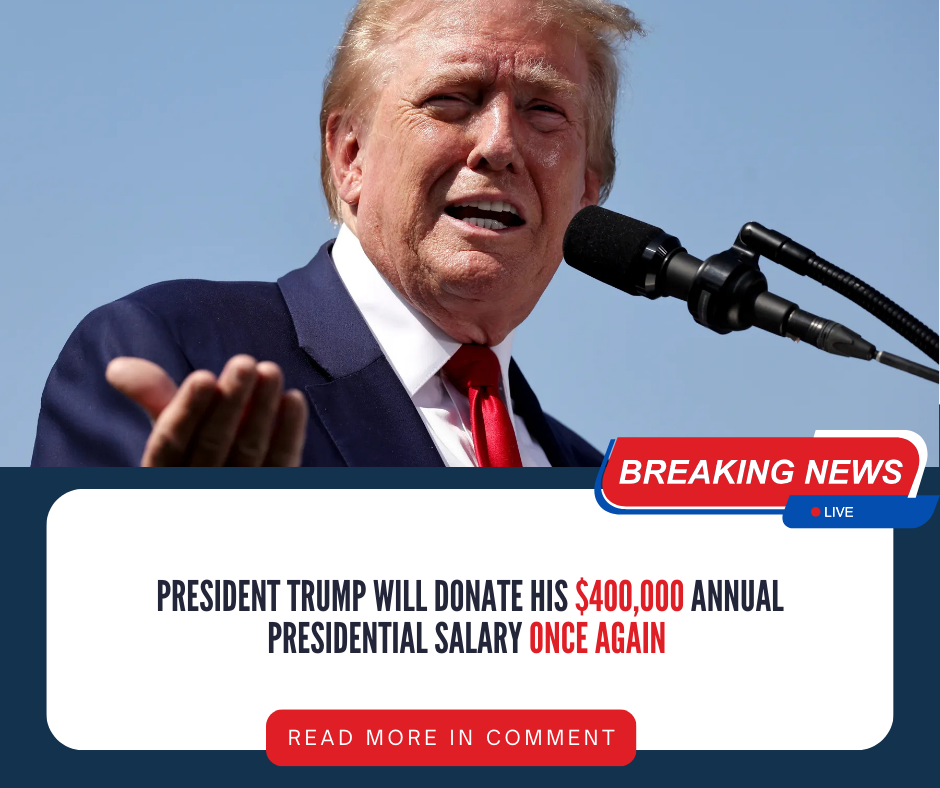
A Symbolic Gesture: Donating the Presidential Salary
The Constitution of the United States, under Article II, Section 1, Clause 7, mandates that the president receive a salary to ensure financial independence and guard against conflicts of interest. Currently set at $400,000 per year, the presidential salary also includes allowances such as a $50,000 expense account and a one-time $100,000 fund for White House redecoration. President Trump, however, has chosen to accept the salary as required but donate the entirety of it to federal agencies and public initiatives, a practice he began during his first term (2017–2021).
In his first term, President Trump donated at least $1.4 million of his $1.6 million salary to various federal agencies, including:
- National Park Service: Received $78,333 in Q1 2017 to maintain historic battlefields, such as Antietam.
- Department of Education: Received $100,000 in Q2 2017 to fund STEM-focused summer camps.
- Department of Health and Human Services: Benefited from multiple donations, including $100,000 in 2019 to combat the opioid crisis.
- Department of Homeland Security: Received $100,000 in 2019.
- Department of Agriculture: Received $100,000 in 2019 to support farmer programs.
These contributions supported critical areas such as education, public health, and historical preservation, reflecting a targeted approach to federal investment. However, questions arose about transparency, particularly in the final two quarters of 2020, when the White House did not publicly disclose donation details. Despite these gaps, credible sources, including Forbes and USA Today, confirmed that at least 14 of the 16 quarterly donations were made.
In his second term, President Trump has reaffirmed his intent to continue this practice, stating on platforms like X that he is “putting America first, not a paycheck” (
@DKH013, 5/5/2025). While this gesture resonates with many as a sign of selflessness, it also prompts us to ask: How does this act of personal sacrifice align with the broader policies and priorities that shape the lives of everyday Americans?
Historical Context: A Rare Tradition
President Trump is not the first to forgo the presidential salary, though his approach is distinctive in its public visibility. Historically, two other presidents made similar gestures:
- George Washington: Initially declined his $25,000 salary but accepted it at Congress’s insistence to maintain transparency, reportedly spending much of it on public purposes.
- Herbert Hoover and John F. Kennedy: Both donated their salaries to charitable causes, with Kennedy supporting organizations like the Boy Scouts, Girl Scouts, and the United Negro College Fund.
In a modern context, President Trump’s decision stands out for its publicity. Through press conferences and social media, he has ensured that his donations are widely known, aligning with his broader strategy of direct communication with the American people. This approach contrasts with the quieter philanthropy of his predecessors, reflecting the evolving role of media in shaping political narratives.
The Significance: A Call for Broader Reflection
As a Democrat, I approach President Trump’s decision with both appreciation and critical reflection. His choice to donate his salary carries several layers of meaning, each deserving careful consideration.
- A Symbol of Sacrifice: In an era where public trust in government is often strained, forgoing a salary can signal a leader’s commitment to service over personal gain. President Trump’s supporters view this as evidence of his dedication, with posts on X noting that he “lost $2 billion during his first term and still donated his salary” (@ExposingAbsurd, 10/12/2024). For many Americans, this resonates as a powerful statement of prioritizing the nation’s needs.
- Reinforcing Public Trust: By directing his salary to agencies like the Department of Veterans Affairs or the National Park Service, President Trump highlights issues like veterans’ care and cultural preservation. These contributions, while modest in the context of federal budgets, can foster goodwill and demonstrate a commitment to tangible outcomes. Yet, as Democrats, we must ask whether these donations are accompanied by policies that equitably address systemic challenges, such as healthcare access or economic inequality.
- A Reflection of Personal Wealth: President Trump’s financial independence, as a billionaire with diverse business interests, enables this gesture in ways that may not be feasible for other leaders. While admirable, it also underscores disparities in wealth and opportunity that Democrats seek to address through progressive policies. The contrast between his personal sacrifice and the broader economic struggles of working families invites a deeper conversation about fairness and shared prosperity.
- A Contrast with Political Norms: President Trump’s decision sets him apart from career politicians, a distinction he has long emphasized. Posts on X compare him favorably to others, noting that “unlike Biden, who amassed millions, Trump never took the $400,000 salary” (@paulsperry_, 21/9/2023). While this narrative resonates with his base, Democrats must emphasize that true leadership is measured not only by personal gestures but by policies that uplift all Americans, regardless of background or circumstance.
Public and Media Reactions
President Trump’s salary donation has elicited a range of responses, reflecting the polarized state of American discourse. Supporters celebrate it as a historic act of patriotism, with X posts proclaiming, “He’s been slandered, sued, impeached, and even shot at, yet still gives up his salary. That’s not selfishness!” (
@SandyEverett777, 9/12/2024). These sentiments underscore the emotional connection many feel to his leadership style.
Critics, however, question the gesture’s motives and impact. Some argue it serves as a public relations tactic, given President Trump’s substantial wealth and the relatively small scale of the donations compared to federal budgets. Reports, such as those from The Washington Post, have raised concerns about the lack of transparency in 2020’s final donations. Additionally, allegations of emoluments clause violations—related to foreign government payments to Trump businesses—complicate the narrative of selflessness.
As Democrats, we must navigate this discourse with nuance. While acknowledging the gesture’s symbolic value, we should advocate for transparency in its execution and urge that it be paired with policies that address systemic inequities. Leadership is not defined by a single act but by a consistent commitment to the common good.
Looking Ahead: Opportunities for Impact
As President Trump embarks on his second term, his salary donations present an opportunity to support critical national priorities. Based on his first-term contributions, we might expect continued focus on:
- Veterans’ Services: Past donations to the Department of Veterans Affairs supported mental health and financial programs for veterans.
- Public Health: Contributions to the Department of Health and Human Services aided opioid crisis response and COVID-19 efforts.
- Cultural Preservation: Donations to the National Park Service reinforced efforts to protect America’s historical legacy.
Moving forward, President Trump could leverage these donations to address emerging challenges, such as workforce development, climate resilience, or rural economic revitalization. By pairing these contributions with transparent communication and inclusive policies, he could broaden their impact and appeal to a wider cross-section of Americans.
Conclusion: A Moment for Unity and Accountability
President Donald Trump’s decision to donate his $400,000 presidential salary is a gesture that invites both admiration and scrutiny. As a Democrat, I recognize its symbolic power—a reminder that leadership often requires personal sacrifice. Yet, I also believe that true leadership extends beyond individual acts to encompass policies that ensure opportunity, justice, and dignity for all.
In a time of division, this moment calls for unity and accountability. We must celebrate gestures that prioritize public service while advocating for a vision of governance that addresses the systemic challenges facing our nation. As President Trump continues this practice, I urge him to do so with full transparency and to align his contributions with policies that uplift every American—from urban centers to rural heartlands, from factory floors to classrooms.
Let this act be a starting point for a broader commitment to the American people. As Democrats, we stand ready to work across the aisle to build a future where sacrifice, service, and equity define our nation’s path forward. Together, we can ensure that “America First” means an America that works for everyone.